
 EN
EN
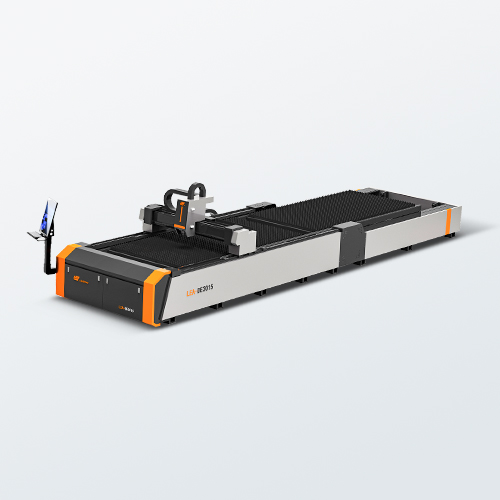
Decoding the Core Technical Ecosystem of a High-Performance Laser Metal Cutting Machine
For modern industrial fabrication facilities and expanding metal workshops, investing in a high-uptime laser metal cutting machine represents a pivotal technical milestone. However, browsing through hundreds of engineering quotes can be overwhelming, especially when every manufacturer claims absolute market dominance. In real-world factory workflows, the long-term asset value of a solid-state fiber laser is verified not on the day of delivery, but during unexpected, heavy-duty production multi-shifts where localized accuracy drift and structural fatigue directly threaten delivery contracts. This technical guide leverages decades of global export diagnostics across diverse metallurgy environments to deconstruct the essential engineering sub-systems that enterprise buyers must carefully audit. Rather than focusing purely on initial capital quotes, savvy procurement managers evaluate machinery through a comprehensive total cost of ownership matrix, systematically analyzing optoelectronic stability, kinematic synchronization, mechanical bed metallurgy, and localized safety architectures to ensure a rapid return on investment.
Matching Optoelectronic Power Platforms with Material Substrate Requirements
The first and most critical component determining baseline machinery costs and processing throughput is the fiber laser power source, which must be perfectly calibrated to a shop's historical and projected metal thickness frequencies. Premium industrial systems integrate globally recognized, Tier-1 optoelectronic brands such as IPG, Raycus, or MAX, which feature highly stable wave absorption metrics and expansive global distribution networks that ensure predictable asset depreciation. For facilities focusing primarily on thin-gauge sheet metal fabrication or decorative arts, a solid-state entry platform ranging from 1kW to 2kW offers the ideal balance between capital efficiency and low operational utilities. Conversely, expanding commercial job shops processing a versatile mix of structural plate thicknesses require mid-range architectures between 3kW and 4kW to maintain high-speed linear feed rates without causing heavy dross formation. For continuous, multi-shift industrial manufacturing where rapid thick-plate vaporization is essential, deploying an ultra-high-power configuration of 6kW or greater ensures clean edge topographies, minimizes the localized heat-affected zone, and prevents catastrophic structural edge deformation during complex nesting routines.
Optimizing Kinematic Motion Mechanics and High-Torque Servo Architecture
The mechanical precision of a high-speed laser metal cutting machine depends entirely on the synchronized kinematics of its motion control systems, linear bearings, and rotary drive trains. True manufacturing accuracy over decades of multi-shift execution requires a heavy-duty, heat-treated welded steel frame that has undergone rigorous thermal stress relief and vibration aging to entirely eliminate internal structural distortion. This rigid mechanical foundation must be paired with premium linear guidance tracks—such as those manufactured by THK or HIWIN—and driven by high-torque, closed-loop servo motor systems from industry leaders like YASKAWA or FUJI. This precise synchronization prevents microscopic positioning drift caused by high-acceleration mechanical friction, guaranteeing consistent dimensional tolerances when executing complex geometric cutouts. Furthermore, when processing specialized structural shapes like square, rectangular, or hexagonal tubing, the system must deploy pneumatically clamped front and rear synchronous chucks to secure the metal tightly, eliminating point-contact slippage and preventing material deflection during high-velocity directional adjustments.
Evaluating Automated Cutting Assemblies and Advanced CNC Control Layers
Maximizing daily factory throughput while mitigating ongoing operational expenditures requires a sophisticated interface between the physical cutting assembly and the underlying CNC software intelligence. Enterprise buyers should look for systems utilizing advanced automated cutting heads from established brands like Raytools or Precitec, which incorporate intelligent real-time dynamic autofocusing sensors that automatically adjust focal positions based on material density changes, successfully eliminating manual setup bottlenecks and protecting valuable optical components. This advanced hardware must be tightly integrated with robust, industry-standard control software platforms such as Sypcut or WEIHONG, which allow operators to easily manage complex production schedules. These smart software layers feature advanced vision-based active obstacle avoidance algorithms that automatically detect material lifting or warped metal profiles during active fabrication cycles, instantly adjusting the vertical motion path of the cutting head to eliminate devastating collision risks without requiring constant human monitoring or sacrificing structural execution speed.
Synthesizing Machine Enclosures and Dual-Exchange Table Dynamics
A premium laser metal cutting machine is never a standalone device; its physical configuration must protect your workforce while driving down the overall material handling cycle time. For high-volume manufacturing environments, a full-cover enclosed machine housing is an essential feature, as it completely contains hazardous stray reflections, high-velocity sparks, and metallic fumes within a closed-loop environment that is thoroughly ventilated by zoned extraction systems, making compliance with international Class 4 radiation safety standards straightforward. This safety architecture should be seamlessly paired with an automated dual-exchange worktable design, which allows trained production operators to safely unload finished components and reload raw sheet metal on an external platform while the secondary internal table actively executes high-speed cutting sequences. Consolidating these advanced structural features with verified factory documentation, CE compliance markings, and established direct-to-factory technical guidance transforms the physical machinery into a secure business partnership, allowing fabricators to scale their production capabilities confidently and reduce their long-term cost-per-part.
Table of Contents
- Decoding the Core Technical Ecosystem of a High-Performance Laser Metal Cutting Machine
- Matching Optoelectronic Power Platforms with Material Substrate Requirements
- Optimizing Kinematic Motion Mechanics and High-Torque Servo Architecture
- Evaluating Automated Cutting Assemblies and Advanced CNC Control Layers
- Synthesizing Machine Enclosures and Dual-Exchange Table Dynamics