
 EN
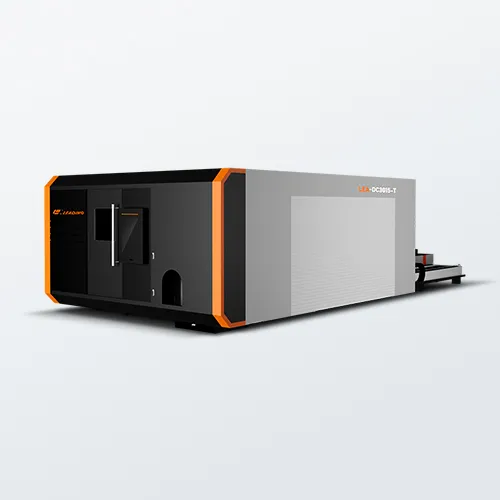
Laser Cut Machine Fundamentals: Definition, Core Components, and 2026 Context
A laser cut machine in 2026 is a computer-controlled fabrication tool that uses a concentrated beam of light to melt, burn, or vaporize material along a predefined path. What sets today’s system apart is the tight integration of optics, motion, and sensing into a single, intelligent manufacturing module.
Key subsystems: laser source, CNC motion platform, optics, and assist gas delivery
Every industrial laser cut machine is built around four interdependent subsystems. The laser source—typically a fiber oscillator or CO₂ tube—generates the raw beam. For metal cutting, fiber lasers dominate due to their short wavelength and high electrical efficiency, with many systems now surpassing 40% wall-plug efficiency. The beam travels through protective bellows or an articulated arm to the cutting head, where a lens assembly focuses it to a spot smaller than a human hair.
The CNC motion platform translates the cutting head or workpiece according to G-code instructions. Modern platforms use linear motors with sub-micrometer encoders and jerk-limited trajectory planning to maintain 0.05 mm positional accuracy at traverse speeds above 300 m/min. Optics—including mirrors, collimators, and protective windows—preserve beam quality, while a motorized focal-adjust system compensates for material thickness changes mid-cut. The fourth subsystem is assist gas delivery: a regulated stream of oxygen, nitrogen, or compressed air exits the nozzle coaxially with the beam, ejecting molten material, shielding the lens, and driving exothermic reactions that double cutting speed in mild steel.
From legacy tool to intelligent manufacturing node: redefining the laser cut machine in Industry 4.0 ecosystems
Once a standalone tool operated via a simple pendant, the laser cut machine has become a connected edge-computing node in the smart factory. Embedded IIoT gateways stream real-time data—laser power, gas pressure, axis vibration, nozzle condition—to a central manufacturing execution system (MES). This enables closed-loop quality control: a vision camera inside the cutting head inspects kerf width, and AI models adjust parameters within milliseconds. The machine also contributes to a digital twin, supporting predictive scheduling and remote troubleshooting. In 2026, the laser cut machine is no longer just a cutter; it is a self-aware, networked asset that communicates with loading robots, ERP software, and maintenance platforms, forming a vital link in autonomous, lights-out production.
How a Laser Cut Machine Works: Physics, Process Flow, and Real-Time Control
Photon-material interaction: absorption, melting/vaporization, and kerf formation by material type
The fundamental operation begins when the laser cut machine directs a concentrated beam of photons onto the material surface. The material absorbs this intense light energy, converting it instantly into heat. This interaction depends critically on wavelength absorption: metals like steel efficiently absorb a fiber laser’s 1.06 µm wavelength, causing rapid melting or vaporization. An assist gas—typically nitrogen or oxygen—ejects molten material from the kerf (the narrow cut gap) to form a clean edge. For thicker steel, oxygen assist triggers an exothermic reaction that adds energy and boosts cutting speed. Fiber laser dominance in 2026 enables precise, high-speed vaporization of thin metals with minimal heat distortion—making it ideal for demanding sheet metal applications.
CNC-integrated beam control: motion synchronization, focal tracking, and closed-loop feedback in modern laser cut machines
A modern laser cut machine executes cuts through a sophisticated CNC system that synchronizes the laser head’s motion with beam output. After loading a digital G-code file, the CNC directs precision motors to guide the cutting head along a predetermined path with minimal deviation. Focal tracking maintains a constant, tiny spot size—often under 0.2 mm—which is essential for consistent kerf width, especially on uneven or warped sheet metal. Integrated sensors provide closed-loop feedback on cutting height, beam power, and nozzle standoff, enabling real-time Z-axis micro-adjustments to compensate for material warpage. This intelligent synergy of motion, optics, and gas ensures high-speed execution of complex geometries and sharp corners—hallmarks of contemporary sheet metal fabrication.
Laser Types for Cutting in 2026: Fiber Dominance, CO₂ Niche Applications, and Hybrid Advancements
Why fiber lasers lead metal cutting: efficiency, beam quality, and maintenance advantages in today’s laser cut machine
Fiber lasers dominate metal processing in 2026 due to electrical efficiency reaching 30–50%—roughly three times that of traditional CO₂ systems—lowering energy consumption and operating costs. Their near-diffraction-limited beam quality (M² < 1.3) enables precise kerf widths and faster cutting speeds on reflective alloys like copper and aluminum, which previously challenged CO₂ resonance absorption. Maintenance is simplified: the monolithic fiber architecture eliminates mirror alignment and resonator gas refills, while diode pump sources routinely exceed 30,000 hours of lifetime. Predictive maintenance algorithms now leverage sensor data to anticipate failures. According to Fortune Business Insights (2025), fiber lasers are projected to hold a 29.44% share of the global cutting machine market in 2026—solidifying their position as the default choice for sheet metal and high-volume fabrication.
CO₂ and emerging solid-state alternatives: matching wavelength to non-metal materials and hybrid system innovations
CO₂ lasers (10.6 µm wavelength) remain irreplaceable for cutting organic materials like acrylic, wood, leather, and textiles. Their long wavelength is readily absorbed by these substrates, producing clean, flame-polished edges with minimal charring or heat-affected zones—critical for signage, packaging, and decorative applications. Meanwhile, solid-state innovations are gaining traction: tunable semiconductor lasers and hybrid systems that combine a fiber source for metal cutting with a CO₂ or UV module for non-metal tasks expand versatility within a single laser cut machine. Some manufacturers integrate dual-wavelength beam delivery, enabling quick, alignment-free changeover between material types. As fiber tightens its grip on metal applications, CO₂ and hybrid architectures secure enduring niches—ensuring technological coexistence rather than obsolescence.
2026 Laser Cut Machine Trends: AI Integration, Smart Connectivity, and Sustainable Operation
AI-powered predictive maintenance and adaptive path optimization for uptime and precision
AI transforms the laser cut machine into a self-optimizing production node. Real-time sensor data feeds algorithms that forecast component wear—such as lens degradation, nozzle erosion, or pump diode fatigue—triggering maintenance only when needed. This predictive approach minimizes unplanned downtime and extends machine life. Simultaneously, adaptive path optimization analyzes material variance, thermal drift, and surface condition to recalculate the smoothest, fastest, and most energy-efficient cutting trajectory on the fly. These functions operate in concert, turning every job into a learning cycle that continuously sharpens both speed and dimensional accuracy—while reducing energy use per part and supporting sustainability goals across the production floor.
FAQ
What makes a laser cut machine different from traditional cutting tools?
Laser cut machines use a concentrated beam of light for cutting, enabling high precision, speed, and the ability to handle various materials with minimal distortion.
Why are fiber lasers preferred for metal cutting?
Fiber lasers offer higher electrical efficiency, better beam quality, lower maintenance, and superior performance on reflective metals like aluminum and copper.
How does AI improve laser cut machine operations?
AI enables predictive maintenance, adaptive path optimization, and real-time feedback, ensuring higher precision and uptime while reducing energy consumption.
What materials are best suited for CO₂ lasers?
CO₂ lasers excel in cutting organic materials like wood, acrylic, textiles, and leather due to their longer wavelength absorption.
What role does the CNC system play in laser cutting?
The CNC system controls cutting head movement, synchronizes beam output, and adjusts focal tracking to deliver precise, high-speed cuts on challenging geometries.
Table of Contents
- Laser Cut Machine Fundamentals: Definition, Core Components, and 2026 Context
- How a Laser Cut Machine Works: Physics, Process Flow, and Real-Time Control
- Laser Types for Cutting in 2026: Fiber Dominance, CO₂ Niche Applications, and Hybrid Advancements
- 2026 Laser Cut Machine Trends: AI Integration, Smart Connectivity, and Sustainable Operation
- FAQ