
 EN
EN
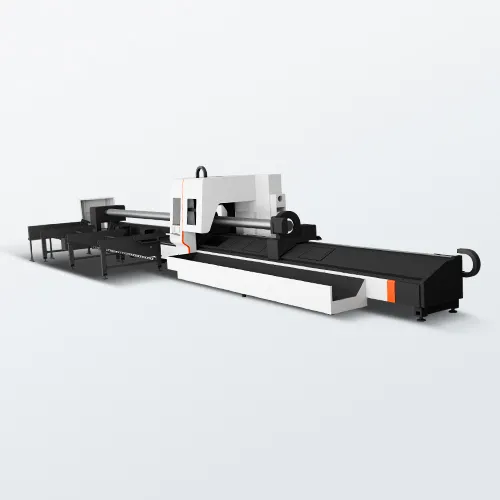
Reconnaissance des seuils techniques dans la production de profilés structurels
De nombreuses entreprises de fabrication métallique en expansion traitent initialement des tubes et profilés structuraux à l’aide de machines anciennes fondamentalement non optimisées pour ces tâches, en s’appuyant sur des scies à ruban manuelles, des coupeuses plasma traditionnelles ou des postes de poinçonnage mécanique. Bien que ces méthodes initiales répondent fréquemment aux exigences minimales de volume durant les premières phases d’exploitation, un point critique d’inflexion opérationnel apparaît inévitablement lorsque les attentes des clients en matière de qualité, la complexité géométrique des pièces et les volumes de production augmentent. Reporter une migration technologique indispensable engendre des inefficacités croissantes, car les coûts cachés liés à la main-d’œuvre de finition secondaire, aux ajustements de préparation au soudage et aux pertes de matériaux dépassent rapidement les investissements requis pour la modernisation des équipements. Pour les responsables de production visionnaires, la mise en œuvre opportune d’une mise à niveau vers un système de découpe laser à fibre CNC polyaxial dépend de la détection d’indicateurs opérationnels et financiers spécifiques au sein de l’atelier, avant que des goulots d’étranglement de production n’affectent les relations avec les clients.
Surmontage des goulots d'étranglement en aval de l'assemblage et des retouches intensives en main-d'œuvre
Le signal opérationnel le plus critique déterminant une mise à niveau des machines est l’apparition de contraintes chroniques sur le débit aux postes de fabrication en aval, tels que les cellules de soudage et les lignes d’assemblage final. Lorsque des soudeurs qualifiés subissent régulièrement des temps d’inactivité en attendant la préparation manuelle des profilés, ou consacrent un nombre excessif d’heures par poste à des opérations secondaires de débourrage, de meulage et de corrections dimensionnelles dues à des découpes hors tolérance, la base financière du projet se détériore rapidement. Le déploiement d’un système industriel de découpe laser pour tubes transforme fondamentalement cette équation de fabrication en intégrant un mouvement cinématique multi-axes et une accélération haute dynamique afin d’exécuter, en un seul passage automatisé, des joints biaises complexes, des extrémités copées, des fentes et des trous pour boulons. Cette précision optoélectronique supérieure assure des tolérances structurelles répétitives au niveau microscopique et des topographies de bords impeccables, éliminant ainsi totalement les goulots d’étranglement traditionnels en inspection en aval, réduisant les taux de rebuts de composants et permettant un alignement fluide — robotisé ou manuel — en soudage, sans ajustements manuels.
Regroupement de géométries de profil variées et optimisation de l’efficacité de l’espace de travail
Un indicateur structurel complémentaire de la modernisation des machines est l’augmentation de la fréquence de géométries de profil variées dans la matrice quotidienne de fabrication, notamment des profils carrés, rectangulaires, hexagonaux, ovales et des canaux structurels complexes asymétriques. Gérer ces formes variées à l’aide de configurations mécaniques distinctes, de systèmes de serrage localisés ou d’outillages secondaires fortement manuels génère une friction opérationnelle sévère et sous-utilise l’espace précieux au sol de l’usine. Les plateformes automatisées modernes de découpe laser pour tubes résolvent cette complexité en utilisant des mandrins synchrones avant et arrière à serrage pneumatique avancé, entraînés par des mécanismes servo à haut couple, assurant une concentricité de serrage précise sur une large gamme de dimensions de section transversale. Cette polyvalence mécanique permet le traitement de profils variés au sein d’une même file de production, tandis que les couches intégrées de commande numérique par ordinateur (CNC) intelligentes, dotées d’une fonction d’évitement actif d’obstacles basée sur la vision, protègent dynamiquement la tête de découpe laser contre les collisions dues au soulèvement de la pièce, transformant ainsi un processus de traitement de profils instable en un flux de travail prévisible et fortement automatisé.
Quantification des pénalités liées à la marge de sous-traitance et extension stratégique des capacités
Au-delà des dynamiques internes de l’atelier, des indicateurs financiers concrets figurant dans le bilan de l’entreprise fournissent souvent la justification définitive d’une modernisation d’un équipement industriel. Les entreprises exploitant des machines anciennes se voient régulièrement contraintes de refuser des marchés structurels complexes ou de sous-traiter à des tiers le traitement précis de tubes, renonçant ainsi à des marges manufacturières substantielles et perdant le contrôle direct sur les délais de livraison. Lorsque les dépenses en capital accumulées au titre de la sous-traitance externe atteignent, sur un cycle opérationnel typique, le seuil d’acquisition d’un système laser CNC installé directement en usine, la transition stratégique devient immédiatement viable. En outre, les conceptions architecturales et industrielles modernes exigent de plus en plus des géométries spatiales complexes à plusieurs axes et des assemblages tubulaires entrelacés difficiles à réaliser de façon constante par des techniques de fabrication manuelles. L’acquisition d’une infrastructure laser d’origine fabricant, dûment vérifiée et soutenue par des certifications de conformité internationales, garantit un contrôle qualité total, restaure la rentabilité intégrale de l’entreprise et prépare ses capacités manufacturières aux normes mondiales croissantes.
Conclusion : Aligner les dépenses en immobilisations sur la rentabilité à long terme
En définitive, la migration stratégique vers un tube en fibre dédié machine de découpe laser constitue un ajustement calculé entre la capacité actuelle de l’atelier et les objectifs futurs d’expansion commerciale. S’appuyer sur des méthodes de traitement obsolètes dans un paysage manufacturier d’élite génère des passifs financiers croissants qui érodent silencieusement la rentabilité de l’entreprise par une surcharge excessive de main-d’œuvre et des temps d’arrêt opérationnels. En alignant systématiquement l’acquisition de capitaux sur les réalités matérielles concrètes, la capacité d’ingénierie dynamique et les flux de travail automatisés en usine, les entreprises de fabrication se dotent d’un actif de production à forte disponibilité, maximisant ainsi le débit tout en réduisant le coût unitaire à long terme.
Table des matières
- Reconnaissance des seuils techniques dans la production de profilés structurels
- Surmontage des goulots d'étranglement en aval de l'assemblage et des retouches intensives en main-d'œuvre
- Regroupement de géométries de profil variées et optimisation de l’efficacité de l’espace de travail
- Quantification des pénalités liées à la marge de sous-traitance et extension stratégique des capacités
- Conclusion : Aligner les dépenses en immobilisations sur la rentabilité à long terme