
 EN
EN
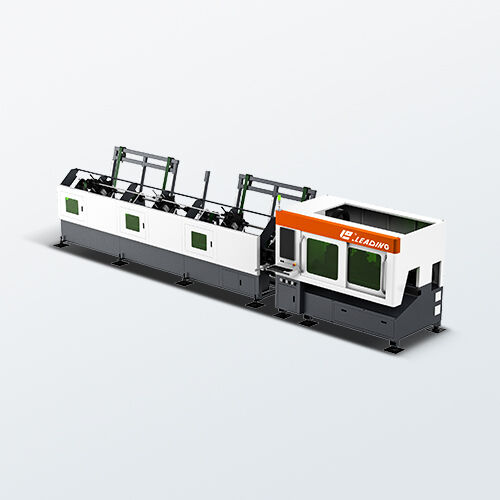
Modern manufacturing demands precision, speed, and efficiency when processing tubular materials across industries. A pipe laser cutting machine represents the pinnacle of advanced manufacturing technology, combining high-powered laser systems with sophisticated automation to deliver unmatched accuracy in cutting pipes, tubes, and hollow profiles. This revolutionary equipment has transformed how manufacturers approach metalworking projects, enabling complex geometries and intricate designs that were previously impossible with conventional cutting methods.
The evolution of laser cutting technology has reached new heights with specialized systems designed specifically for cylindrical materials. These machines integrate multiple axes of movement, allowing operators to create complex cuts, holes, notches, and profiles on various pipe materials including steel, stainless steel, aluminum, and copper alloys. The precision achievable with modern pipe laser cutting systems often exceeds traditional mechanical cutting methods by significant margins, making them indispensable for industries requiring tight tolerances and superior edge quality.
Industrial applications spanning automotive exhaust systems, furniture manufacturing, architectural frameworks, and aerospace components rely heavily on the capabilities of these sophisticated machines. The technology eliminates secondary operations typically required after conventional cutting, such as deburring, grinding, or additional machining processes. This streamlined workflow not only reduces production time but also minimizes material waste and labor costs, contributing to overall manufacturing efficiency and profitability.
Fundamental Operating Principles
Laser Generation and Beam Delivery Systems
The heart of any pipe laser cutting machine lies in its laser generation system, typically utilizing fiber laser technology for optimal performance and reliability. These systems produce coherent light through stimulated emission, concentrating enormous amounts of energy into a focused beam capable of melting and vaporizing metal materials. The laser source generates wavelengths specifically tuned for maximum absorption by metallic surfaces, ensuring efficient energy transfer and clean cutting results.
Beam delivery systems transport the generated laser energy from the source to the cutting head through sophisticated optical pathways. High-quality mirrors, lenses, and fiber optic cables maintain beam integrity throughout the delivery process, preserving the focused energy density required for precise cutting operations. Advanced cooling systems protect these optical components from thermal damage, ensuring consistent performance during extended production runs.
The cutting head assembly incorporates focusing optics that concentrate the laser beam to an extremely small spot size, typically ranging from 0.1 to 0.3 millimeters in diameter. This intense energy concentration creates temperatures exceeding 10,000 degrees Celsius at the focal point, instantly melting through metal materials. Assist gases, usually oxygen for mild steel or nitrogen for stainless steel and aluminum, help remove molten material from the kerf and enhance cutting quality.
Multi-Axis Motion Control Technology
Sophisticated motion control systems enable pipe laser cutting machines to manipulate both the workpiece and cutting head through multiple axes simultaneously. Standard configurations typically include linear axes for positioning along the pipe length and rotational axes for circumferential movement around the pipe diameter. Advanced models incorporate additional tilting axes that allow the cutting head to approach the workpiece at various angles, enabling beveled cuts and complex three-dimensional geometries.
Servo motor systems provide the precise positioning accuracy required for intricate cutting operations, with typical positioning tolerances measured in hundredths of millimeters. Encoder feedback systems continuously monitor axis positions, enabling real-time corrections and maintaining dimensional accuracy throughout the cutting process. This closed-loop control ensures repeatable results across multiple workpieces, essential for high-volume production environments.
Interpolation algorithms coordinate movement across all axes, creating smooth tool paths that maintain optimal cutting speeds while preserving accuracy. The control system calculates complex trajectories in real-time, adjusting feed rates and laser power levels based on material properties, thickness variations, and geometric requirements. This intelligent control maximizes productivity while maintaining superior cut quality across diverse applications.
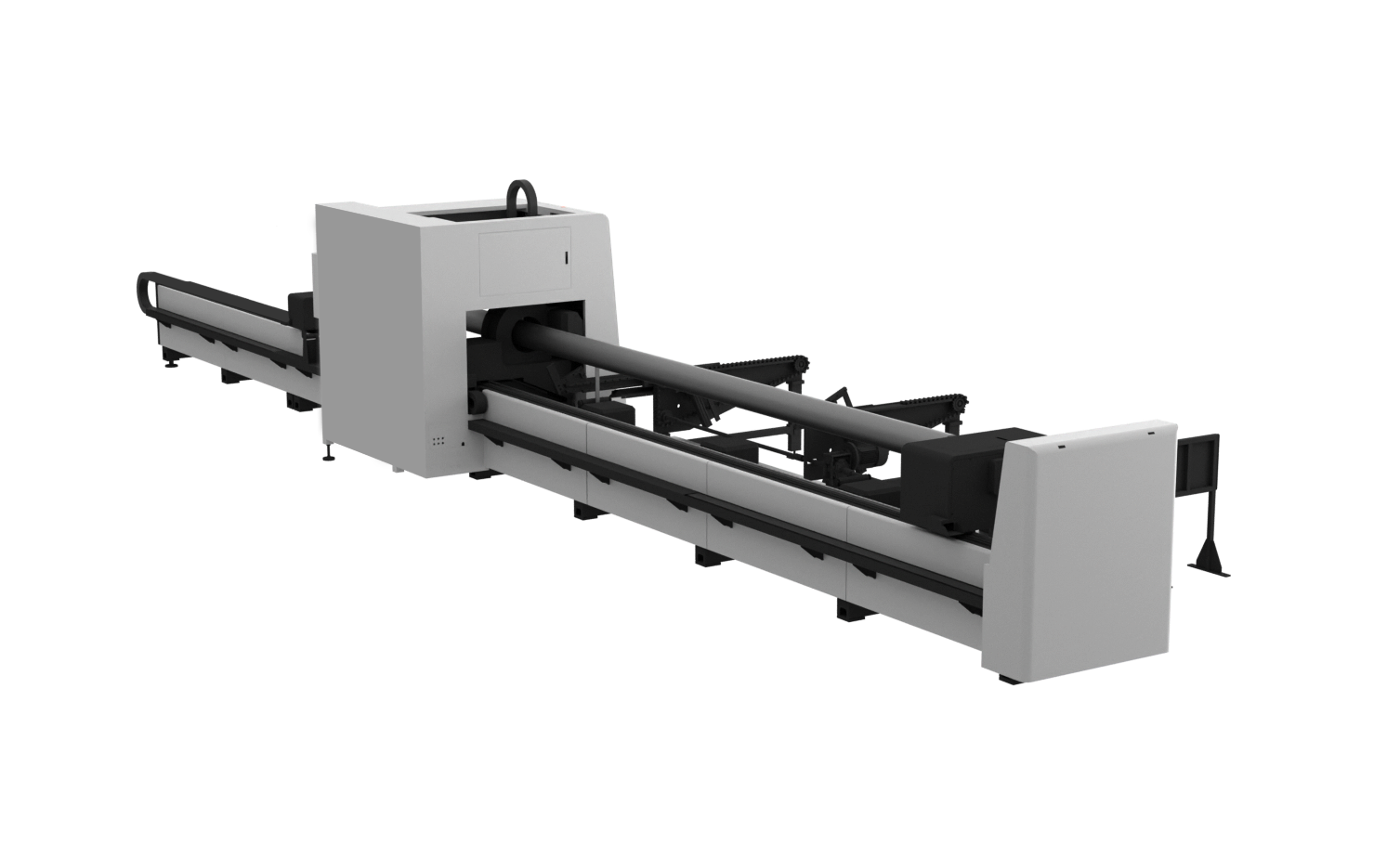
Essential Machine Components and Architecture
Structural Framework and Workholding Systems
The mechanical foundation of a pipe laser cutting machine requires exceptional rigidity and vibration resistance to maintain cutting accuracy during high-speed operations. Welded steel frames or cast iron bases provide the necessary stability, while precision ground guide ways ensure smooth and accurate axis movement. Anti-vibration mounting systems isolate the machine from external disturbances, preventing quality issues caused by environmental factors.
Workholding systems accommodate various pipe diameters and lengths through adjustable chuck mechanisms and tailstock supports. Pneumatic or hydraulic clamping systems secure workpieces firmly while allowing for rapid loading and unloading cycles. Advanced machines incorporate automatic pipe loading systems that handle material from storage racks, further reducing cycle times and labor requirements in high-volume production environments.
Material support systems extend along the machine length, providing continuous support for long pipes during cutting operations. These systems often include adjustable roller supports that maintain proper alignment while allowing free rotation of the workpiece. Integrated measuring systems verify pipe dimensions and straightness, enabling automatic compensation for material variations that could affect cutting accuracy.
Control Systems and Software Integration
Modern pipe laser cutting machines rely on sophisticated computer numerical control systems that integrate seamlessly with design and manufacturing software. These control platforms process complex three-dimensional models, automatically generating optimized cutting programs that minimize production time while maximizing material utilization. Graphical user interfaces simplify operation while providing comprehensive monitoring and diagnostic capabilities.
CAD/CAM software integration enables direct import of engineering drawings and three-dimensional models, eliminating manual programming for complex geometries. Automatic nesting algorithms optimize material usage by arranging multiple parts on single pipe lengths, reducing waste and improving cost efficiency. Simulation capabilities allow operators to verify cutting programs before actual production, preventing costly errors and material waste.
Real-time monitoring systems track cutting parameters, material consumption, and production statistics, providing valuable data for process optimization and quality control. Predictive maintenance algorithms analyze machine performance data to schedule maintenance activities before component failures occur, minimizing unexpected downtime and extending equipment life.
Material Processing Capabilities and Applications
Supported Materials and Thickness Ranges
A high-quality pipe laser cutting machine demonstrates remarkable versatility in processing various metallic materials commonly used in industrial applications. Carbon steel pipes represent the most frequently processed material, with cutting capabilities extending from thin-wall tubing measuring 0.5 millimeters to heavy-duty structural pipes exceeding 25 millimeters in wall thickness. The laser cutting process produces clean, oxide-free edges on carbon steel, often eliminating the need for secondary finishing operations.
Stainless steel processing requires specialized parameter optimization to achieve superior edge quality and prevent heat-affected zone contamination. Nitrogen assist gas creates inert cutting environments that preserve the corrosion-resistant properties of stainless steel materials. Advanced pipe laser cutting machine configurations can process stainless steel pipes up to 20 millimeters wall thickness while maintaining tight dimensional tolerances and smooth surface finishes.
Aluminum alloys present unique challenges due to their high thermal conductivity and reflectivity characteristics. Specialized laser wavelengths and optimized cutting parameters overcome these material properties, enabling clean cuts on aluminum pipes used in aerospace, automotive, and architectural applications. Copper and brass materials, while more challenging due to their extreme reflectivity, can also be processed effectively with proper parameter optimization and safety precautions.
Geometric Complexity and Design Flexibility
The multi-axis capabilities of modern pipe laser cutting machines enable creation of complex geometries that would be impossible or extremely expensive using conventional machining methods. Intersecting holes, slots, notches, and profiles can be cut with precision positioning and smooth surface finishes. Beveled edges for welding preparation, compound angles for structural connections, and intricate decorative patterns all fall within the capabilities of advanced systems.
Three-dimensional cutting capabilities allow operators to create complex joints and connections directly during the cutting process, eliminating secondary machining operations. Saddle cuts for pipe-to-pipe connections, fish mouth joints for structural applications, and custom profiles for specialized assemblies can all be programmed and executed automatically. This flexibility enables manufacturers to produce complex assemblies more efficiently while maintaining consistent quality standards.
Marking and engraving capabilities integrated into many pipe laser cutting machines add valuable functionality for part identification, traceability, and decorative applications. Laser parameters can be adjusted to create permanent markings without compromising structural integrity, enabling serialization, branding, and quality control marking directly during the cutting process.
Quality Control and Precision Standards
Dimensional Accuracy and Repeatability
Precision manufacturing demands exceptional dimensional accuracy and repeatability from pipe laser cutting machines, requirements that modern systems consistently achieve through advanced control technologies. Typical dimensional tolerances range from ±0.1 to ±0.05 millimeters for most applications, with some specialized systems achieving even tighter tolerances for critical components. This level of accuracy ensures proper fit-up for welded assemblies and eliminates costly rework operations.
Repeatability measurements demonstrate the consistency of pipe laser cutting machine performance across multiple identical parts, with typical specifications showing variations of less than 0.02 millimeters between successive cuts. This exceptional repeatability enables high-volume production of precision components without drift or degradation in quality over time. Statistical process control systems monitor dimensional variations, alerting operators to potential issues before they impact production quality.
Thermal compensation systems account for temperature-induced dimensional changes in both the machine structure and workpiece materials, maintaining accuracy throughout extended production runs. Environmental controls and temperature monitoring ensure stable operating conditions that preserve cutting accuracy regardless of ambient temperature variations or seasonal changes.
Surface Quality and Edge Characteristics
The superior edge quality achievable with laser cutting technology represents one of the primary advantages over conventional mechanical cutting methods. Laser-cut edges typically exhibit smooth surfaces with minimal heat-affected zones, reducing or eliminating secondary finishing requirements. Surface roughness measurements on laser-cut pipes often fall within Ra 3.2 to Ra 6.3 micrometers, suitable for most industrial applications without additional processing.
Heat-affected zone control becomes critical when processing materials sensitive to thermal distortion or metallurgical changes. Optimized cutting parameters minimize heat input while maintaining cutting speed, preserving material properties adjacent to cut edges. Rapid cooling rates inherent in laser cutting processes often result in improved mechanical properties compared to thermal cutting methods that introduce excessive heat into the workpiece.
Edge perpendicularity and kerf width consistency contribute significantly to assembly quality and welding performance. Laser cutting typically produces perpendicular edges with minimal taper, ensuring proper fit-up for welded joints and mechanical assemblies. Consistent kerf widths enable accurate nesting calculations and material utilization optimization, reducing waste and improving cost efficiency.
Industrial Applications and Market Sectors
Automotive and Transportation Industries
The automotive industry represents one of the largest markets for pipe laser cutting machine applications, driven by demands for lightweight structures, improved fuel efficiency, and complex exhaust system designs. Exhaust pipe manufacturing requires precise cuts, bends, and connections that laser cutting technology delivers efficiently and cost-effectively. The ability to create complex geometries in single setups reduces assembly time and improves product quality.
Chassis components, roll cage structures, and suspension elements benefit from the precision and flexibility of laser cutting technology. Complex joints and connections can be cut directly into structural tubes, eliminating welding preparation time and ensuring proper fit-up. The automotive industry's emphasis on weight reduction drives demand for thin-wall tubing applications where laser cutting provides superior edge quality and minimal heat distortion.
Electric vehicle battery cooling systems utilize intricate pipe networks that require precise manufacturing tolerances and leak-proof connections. Laser cutting enables creation of complex cooling channel geometries while maintaining dimensional accuracy critical for proper thermal management. The technology's ability to process aluminum and copper alloys makes it ideal for these specialized applications.
Architectural and Construction Applications
Modern architectural design increasingly incorporates complex tubular structures that showcase the geometric flexibility possible with pipe laser cutting machines. Decorative elements, structural connections, and custom profiles can be created with precision and repeatability, enabling architects to realize complex design visions. The technology supports both functional and aesthetic requirements in contemporary construction projects.
Handrail systems, decorative screens, and architectural facades utilize laser-cut tubes to create intricate patterns and connections. The ability to cut complex profiles and intersecting geometries enables creation of visually striking elements while maintaining structural integrity. Custom connection details can be cut directly into structural members, simplifying assembly and reducing construction time.
Structural steel fabrication benefits from the precision and efficiency of laser cutting technology, particularly for complex connections and custom details. Bridge construction, building frameworks, and industrial structures utilize laser-cut components to achieve precise fit-up and reduce field modification requirements. The technology enables prefabrication of complex assemblies with confidence in dimensional accuracy and assembly compatibility.
FAQ
What materials can be processed with a pipe laser cutting machine
Pipe laser cutting machines can process a wide variety of metallic materials including carbon steel, stainless steel, aluminum alloys, copper, brass, and various specialty alloys. The thickness range typically extends from 0.5mm thin-wall tubing up to 25mm heavy-duty structural pipes, depending on the material type and laser power configuration. Each material requires optimized cutting parameters including laser power, cutting speed, and assist gas selection to achieve optimal results. Material reflectivity, thermal conductivity, and melting characteristics influence processing capabilities and quality outcomes.
How does cutting accuracy compare to traditional machining methods
Laser cutting technology typically achieves dimensional tolerances of ±0.05 to ±0.1 millimeters, often exceeding the accuracy of conventional mechanical cutting methods. The non-contact nature of laser cutting eliminates tool wear and associated dimensional drift, ensuring consistent accuracy throughout production runs. Heat-affected zones are minimal compared to plasma or flame cutting, preserving material properties and dimensional stability. The precision and repeatability of laser cutting make it ideal for applications requiring tight tolerances and superior edge quality.
What safety considerations are important for pipe laser cutting operations
Laser safety protocols require comprehensive training, proper personal protective equipment, and controlled access to laser radiation areas. Eye protection specifically designed for the laser wavelength being used is mandatory for all personnel in the vicinity. Proper ventilation systems remove fumes and particles generated during cutting operations, protecting operator health and maintaining air quality. Fire safety measures include appropriate extinguishing systems and material handling procedures, as laser cutting generates significant heat and can ignite flammable materials.
How do maintenance requirements affect operational costs
Regular maintenance of pipe laser cutting machines includes cleaning optical components, replacing consumable parts such as nozzles and protective windows, and servicing mechanical systems including drives and bearings. Preventive maintenance schedules based on operating hours help prevent unexpected downtime and extend equipment life. Laser source maintenance varies by technology type, with fiber lasers generally requiring less maintenance than CO2 systems. Proper maintenance practices significantly impact long-term operational costs, productivity, and cut quality consistency.