
 EN
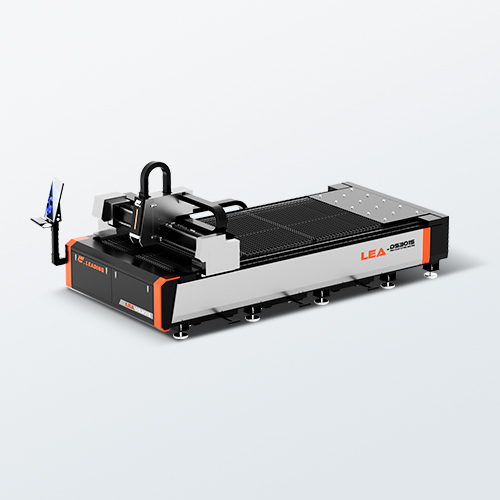
Superior Energy Efficiency and Lower Operational Costs
Energy consumption is one of the largest controllable operating costs in sheet metal fabrication, so manufacturers evaluate wall-plug efficiency closely when selecting a laser cutting machine.
Electrical-to-optical conversion efficiency: 30–50% vs. <15% for CO₂ lasers
Fiber lasers convert 30–50% of electrical input into usable cutting beam energy—more than triple the <15% typical of CO₂ lasers (industry benchmarks, 2023). This higher conversion efficiency means less electricity is wasted as heat, reducing chiller load and thermal stress on optics, motion systems, and power electronics. As a result, fiber lasers consume significantly less power per job and require less cooling infrastructure. For high-volume fabricators, these gains translate directly into lower monthly energy bills and reduced cost per meter cut—especially impactful amid rising electricity prices and tightening sustainability targets. Consistent beam quality across shifts also supports tighter tolerances without extra passes or rework.
Reduced power consumption per meter cut (up to 60% savings) and elimination of resonator gases, mirrors, and turbos
Compared to CO₂ lasers, fiber systems reduce power consumption per meter cut by up to 60% on thin sheet metal (industry data, 2023). They also eliminate recurring consumables: no resonator gas refills, mirror alignments, or turbo-blower maintenance. Instead, fiber lasers use solid-state pump diodes and passive fiber delivery—components with longer lifespans and minimal calibration needs. Operators spend less time managing gas purity, cleaning optics, or troubleshooting beam path issues. The result is fewer unscheduled stops, lower service labor demand, and improved uptime—particularly valuable for shops running two or three shifts. When combined with energy savings, these operational efficiencies often accelerate ROI beyond what the initial price difference suggests.
Faster Cutting Speeds and Higher Production Throughput
2–4× speed advantage on 1–6 mm mild steel — directly boosting laser cutting machine productivity
Fiber lasers cut 1–6 mm mild steel at two to four times the speed of CO₂ lasers—dramatically increasing throughput without added labor or floor space. On thin aluminum, speeds reach up to 1,900 inches per minute versus ~170 ipm for CO₂ systems. This speed advantage shortens cycle times, improves on-time delivery, and expands capacity for new orders. Real-world integration studies show production output can increase by up to 30% in high-volume workflows. Faster cutting also enables longer unattended runs and reduces operator intervention per sheet—key enablers for lights-out manufacturing. For volume-driven fabricators, this productivity lift remains one of the strongest justifications for fiber adoption.
Exceptional Precision and Consistent Cut Quality
Tight kerf width, minimal taper, and positional accuracy (<±0.05 mm) critical for automotive and aerospace laser cutting machine applications
Fiber lasers produce narrow kerf widths (0.05–0.15 mm in thin sheet), minimizing material waste and enabling fine-feature geometry that supports tight assembly tolerances. Their tightly focused beam yields minimal taper, square edges, and smooth surface finishes—reducing or eliminating secondary finishing on brackets, enclosures, and structural panels. High-end systems maintain positional accuracy below ±0.05 mm and repeatability within ±0.02 mm under controlled conditions (2024). This consistency is essential in regulated sectors like automotive and aerospace, where dimensional drift affects fit, fatigue life, and safety certification. Unlike CO₂ lasers, fiber systems sustain stable beam quality over extended runs—lowering scrap from thermal distortion and improving first-pass yield in precision supply chains.
Unmatched Versatility with Reflective and Thin-to-Medium Metals
Reliable, spatter-free cutting of highly reflective materials (e.g., copper, brass, aluminum) enabled by 1.07 µm wavelength
The 1.07 µm wavelength of fiber lasers is strongly absorbed by highly reflective metals—including copper, brass, and aluminum—unlike the 10.6 µm output of CO₂ lasers, which tends to reflect unpredictably. This absorption enables stable, spatter-free cutting across thin to medium gauges without back-reflection damage or process instability. The shorter wavelength also forms a smaller focal spot, supporting narrower kerfs, cleaner edges, and minimal dross—even on challenging nonferrous alloys. As a result, a single fiber laser cutting machine can process mixed-material jobs (e.g., stainless steel, aluminum, and copper) without changing optics, adjusting parameters mid-run, or slowing feed rates. This flexibility streamlines production for e-mobility components, busbars, and heat exchangers—where reflective metals appear frequently and tolerance demands are high.
FAQ
What is the main advantage of fiber lasers over CO₂ lasers?
Fiber lasers offer significantly higher electrical-to-optical conversion efficiency (30–50% compared to less than 15% for CO₂ lasers), leading to lower operational costs, reduced energy consumption, and less cooling infrastructure.
How do fiber lasers achieve faster cutting speeds?
Fiber lasers utilize a tightly focused beam and advanced technology to cut thin to medium metal sheets at speeds 2–4× faster than CO₂ lasers. This allows for shorter cycle times and increased production throughput.
What types of materials can fiber lasers cut?
Fiber lasers can efficiently cut a variety of materials, including stainless steel, aluminum, copper, and brass, due to their 1.07 µm wavelength, which is strongly absorbed by reflective metals.
Are fiber lasers effective for precision applications?
Yes, fiber lasers are highly effective for precision applications like automotive and aerospace manufacturing. They offer tight kerf width, minimal taper, and exceptional positional accuracy (<±0.05 mm).
Do fiber lasers require less maintenance than CO₂ lasers?
Yes, fiber lasers eliminate the need for consumables like resonator gases and mirror alignments, resulting in lower maintenance and operation costs compared to CO₂ lasers.