
 EN
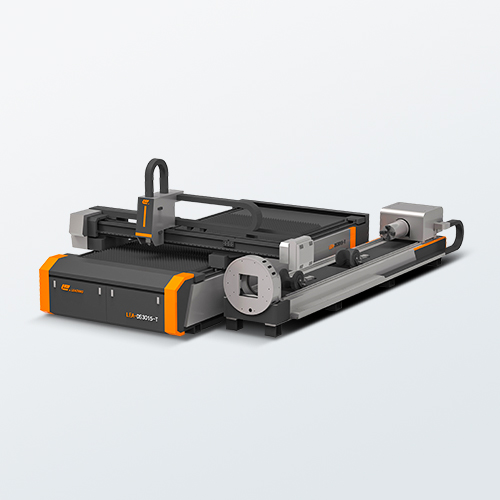
Unmatched Precision and Thermal Control for High-Integrity Welds
Sub-millimeter beam focus enabling micron-level seam control and minimal HAZ
Fiber laser systems focus near-infrared energy into a sub-millimeter spot—typically 30–50 µm in diameter—enabling weld placement with micron-level accuracy. This extreme concentration of power density melts the metal only at the joint line, limiting lateral heat spread and producing an exceptionally narrow heat-affected zone (HAZ), often just tens of microns wide on thin materials. Like precision laser cutting machines, where focal spot position dictates edge quality, this discipline allows operators to match spot size to joint geometry—avoiding excess melt, preserving parent metal strength, and protecting adjacent electronics, seals, or thin walls. Closed-loop focus control and real-time seam tracking maintain focal point stability within a few microns during high-speed travel, significantly reducing edge rounding, undercut, and stray fusion. On thin-walled assemblies, weld faces remain narrow, penetration is highly repeatable, and post-weld straightening drops sharply. In medical device and electronic packaging applications, this enables reliable bonding of tabs, foils, and sensor housings without damaging nearby features—turning delicate joints into stable, production-ready steps.
70% less thermal distortion vs. TIG—validated by AWS A5.18 standards
Unlike TIG welding—which relies on a broad, relatively slow-moving electric arc that heats a wide area and accumulates residual stress—fiber laser energy enters the joint through a tightly focused spot and moves rapidly, minimizing lateral conduction. The resulting low total heat input, validated using AWS A5.18-compliant filler metals, yields up to 70% less thermal distortion than TIG on comparable thin carbon steel joints. This reduction directly supports weld soundness while suppressing angular bending and warping. For manufacturers, it translates to fewer straightening operations, tighter final tolerances, and less rework—especially critical in thin-sheet fabrications demanding dimensional stability. Pulse shaping further refines cooling rates, and proper shielding gas selection reduces porosity and spatter. While joint fit-up remains essential, fiber laser welding narrows the path to a stable, low-distortion outcome—making it a compelling replacement for high-precision TIG applications.
Superior Material Versatility: Welding Reflective and Dissimilar Metals
975 nm wavelength advantage: Enhanced absorption in aluminum, copper, and brass
Fiber lasers operating at 975 nm offer a distinct coupling advantage when welding highly reflective metals like aluminum, copper, and brass. Because their surface reflectivity decreases as wavelength shortens, more incident energy is absorbed rather than scattered—stabilizing keyhole initiation and allowing lower peak power or higher travel speeds compared to standard 1,070 nm systems. In dissimilar joints—such as copper-to-aluminum or brass-to-steel—this improved absorption on the more reflective side mitigates thermal imbalance and helps prevent incomplete fusion. Brass benefits particularly: better energy coupling limits excessive zinc vaporization, reducing porosity risk. Since many industrial fiber sources are shared across cutting and welding platforms, a 975 nm laser cutting machine can be reconfigured with welding optics without sacrificing beam quality—simplifying multi-process production cells. The result is cleaner starts, narrower HAZs, and fewer spatter-related defects on conductive alloys, especially in high-volume battery and electronics manufacturing.
Case study: Zero-defect copper busbar welding at a leading electric vehicle battery plant (2.5 m/min, <5% spatter)
A leading electric vehicle (EV) battery manufacturer validated a 975 nm fiber laser for copper busbar welding in high-volume pack assembly. Using a 600 µm core fiber and 150 mm focusing lens, the system maintained a ~200 µm spot diameter; a 3° beam tilt and argon shielding minimized oxidation and plume interference. Inline vision inspection confirmed consistent weld widths of 1.1–1.3 mm and penetration depths of 0.6–0.8 mm. The process achieved zero-defect joints at 2.5 m/min with <5% spatter—replacing ultrasonic welding, lowering per-joint cost by 38%, and eliminating post-weld cleaning across multi-shift production. No filler metal was required, and electrical resistance remained within specification. This case demonstrates that near-infrared fiber lasers deliver reliable, high-integrity copper welding when beam delivery, shielding, and process parameters are rigorously controlled.
Robust System Architecture: Beam Delivery, Stability, and Integration Readiness
QBH connectors and collimating optics maintaining M² < 1.1 for consistent laser cutting machine–grade beam quality
Stable, repeatable welding performance begins with mechanical and optical integrity. QBH connectors provide a low-loss, repeatable interface between the fiber and processing head, while precision collimating optics expand the raw beam into a parallel path that preserves spatial mode quality. In well-engineered systems, beam quality remains at M² < 1.1—indicating near-Gaussian profile fidelity. This level of consistency is critical: even minor deviations in focus diameter or divergence shift energy density, widen the HAZ, and compromise seam repeatability. A high-quality beam also resists thermal drift during extended operation and supports the tight focusing needed for fine seams. Like laser cutting machines—where beam stability directly governs edge precision—this architecture ensures predictable weld geometry over time. For integration, modular, tool-free connector and collimator designs enable rapid servicing and alignment verification without full optical re-alignment, maximizing uptime and sustaining weld repeatability across shifts and operators.
Intelligent Welding Mode Selection: Keyhole, Conduction, and Wobble Optimization
Keyhole threshold physics: ≥10⁶ W/cm² power density for full-penetration steel joints
Welding behavior shifts fundamentally with power density. In conduction mode—characterized by peak power densities below 10⁵ W/cm²—the melt pool is wide and shallow, suited for cosmetic or hermetic sealing on thin components. Full-penetration steel joints, however, require keyhole mode, which initiates when focused power density reaches at least 10⁶ W/cm². At this threshold, intense localized heating vaporizes metal, forming a stable, narrow keyhole channel that enables deep, efficient beam penetration with minimal heat input. Unlike laser cutting—where focus tuning prioritizes kerf width and dross ejection—keyhole welding demands dynamic stability against melt flow and recoil pressure. The transition from conduction to keyhole isn’t fixed; it depends on beam diameter, travel speed, shielding gas dynamics, and surface condition. Sustaining power density above this threshold increases both welding speed and penetration depth—producing deep, narrow fusion zones ideal for structural steel applications.
| Mode | Peak power density | Weld profile | Typical application |
|---|---|---|---|
| Conduction | <10⁵ W/cm² | Wide, shallow | Thin, cosmetic, sealed electronic parts |
| Keyhole | ≥10⁶ W/cm² | Deep, narrow | Full-penetration steel joints |
Wobble parameter tuning: Frequency, amplitude, and pattern effects on porosity and HAZ width
Wobble welding dynamically oscillates the beam within the melt pool to broaden the fusion zone and modulate thermal input. Frequency, amplitude, and scan pattern collectively determine how energy distributes across the joint. Higher frequencies (e.g., 500–2,000 Hz) with moderate amplitude promote melt agitation—facilitating gas escape and reducing porosity. Circular or figure-eight patterns enhance keyhole stability, while linear oscillation widens the weld face without necessarily increasing penetration. Excessive amplitude, however, broadens the HAZ and may reduce joint strength. In practice, operators begin with low amplitude and incrementally increase until porosity falls below acceptance limits—without exceeding HAZ width specifications. Real-time process monitoring (e.g., plasma emission or back-reflection sensing) helps lock in the optimal parameter window, ensuring repeatability across material thicknesses and joint configurations. This calibrated approach is especially valuable for thick-section steel and high-reliability battery tab welding.
FAQ
What is the primary advantage of fiber laser welding?
The primary advantage of fiber laser welding is its ability to focus near-infrared energy into a highly concentrated spot, enabling precise welds with minimal thermal distortion and a narrow heat-affected zone (HAZ).
Why is the 975 nm wavelength ideal for reflective metals?
Fiber lasers operating at 975 nm exhibit better absorption in reflective metals such as aluminum, copper, and brass. This is because these materials absorb shorter wavelengths more effectively, which stabilizes the welding process and minimizes issues like porosity.
How does fiber laser welding compare to TIG welding in terms of thermal distortion?
Fiber laser welding results in up to 70% less thermal distortion compared to TIG welding. This is due to its highly focused beam, which minimizes heat input to surrounding materials, preserving structural stability and reducing post-weld straightening.
What industries benefit the most from fiber laser welding?
Industries such as medical device manufacturing, electronic packaging, battery production, and electric vehicle manufacturing benefit the most from the precision and efficiency of fiber laser welding.
What are the applications of wobble welding?
Wobble welding is ideal for applications where broader fusion zones or reduced porosity are required, such as high-reliability battery tab welding and thick-section steel joints.
What makes QBH connectors important in fiber laser systems?
QBH connectors provide a reliable, low-loss connection between the fiber and processing head, preserving beam quality (M² < 1.1) and ensuring stable, repeatable welding performance.
Table of Contents
- Unmatched Precision and Thermal Control for High-Integrity Welds
- Superior Material Versatility: Welding Reflective and Dissimilar Metals
- Robust System Architecture: Beam Delivery, Stability, and Integration Readiness
- Intelligent Welding Mode Selection: Keyhole, Conduction, and Wobble Optimization
-
FAQ
- What is the primary advantage of fiber laser welding?
- Why is the 975 nm wavelength ideal for reflective metals?
- How does fiber laser welding compare to TIG welding in terms of thermal distortion?
- What industries benefit the most from fiber laser welding?
- What are the applications of wobble welding?
- What makes QBH connectors important in fiber laser systems?