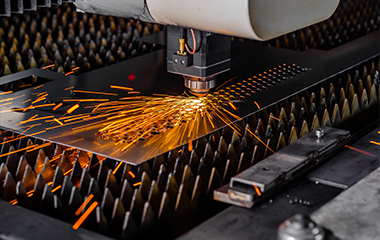
Professional Laser Metal Cutting Table Solutions - Precision Manufacturing Technology

All Categories

Get a Free Quote

Our representative will contact you soon.
Name
Mobile
Email
Company Name
Message
0/1000

laser metal cutting table

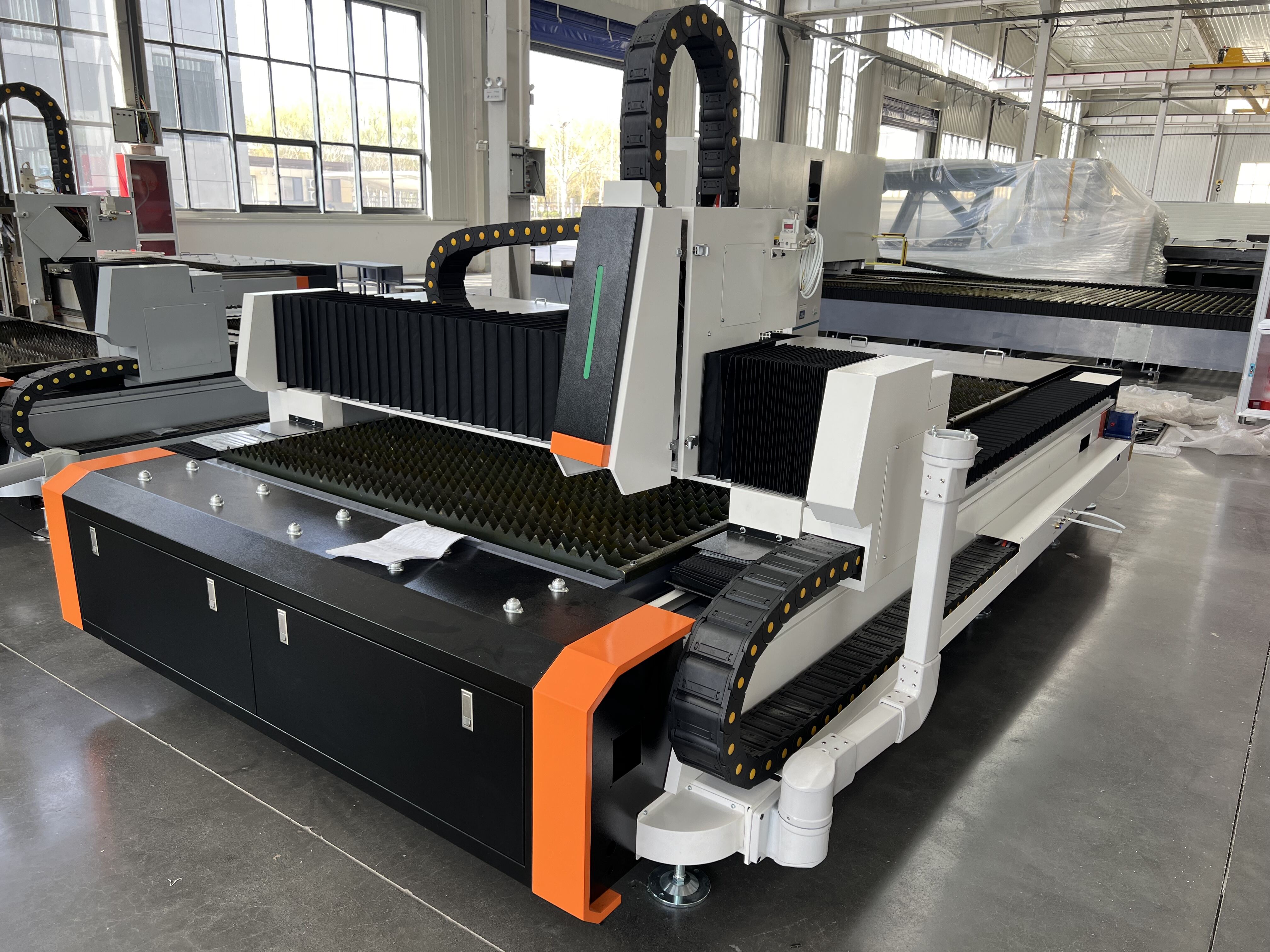
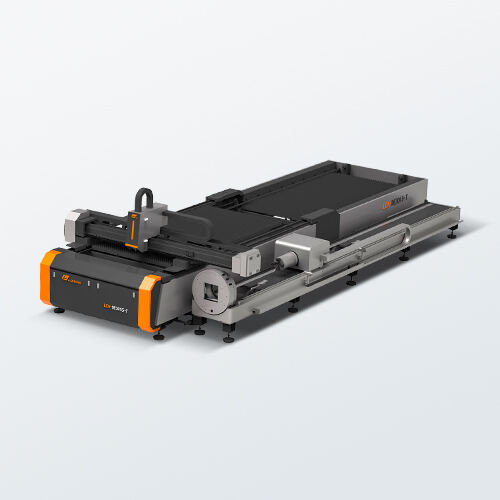
A laser metal cutting table represents the pinnacle of modern manufacturing technology, combining precision engineering with advanced automation to deliver exceptional metal fabrication capabilities. This sophisticated equipment utilizes high-powered laser beams to cut through various metal materials with unparalleled accuracy and speed. The laser metal cutting table consists of several critical components including a robust work surface, laser head assembly, motion control system, and integrated software interface that work together seamlessly to produce precise cuts across different metal thicknesses and compositions. The primary function of a laser metal cutting table centers on its ability to process sheet metal, plates, and structural components with minimal material waste and superior edge quality. The technology employs focused laser energy to melt, vaporize, or blow away material along predetermined cutting paths, resulting in clean, precise cuts that often require no additional finishing processes. Modern laser metal cutting tables feature advanced beam delivery systems that maintain consistent power output and beam quality throughout the cutting process, ensuring uniform results across large workpieces. The technological features of contemporary laser metal cutting tables include adaptive power control systems that automatically adjust laser intensity based on material type and thickness, ensuring optimal cutting parameters for each specific application. These systems also incorporate real-time monitoring capabilities that track cutting progress, detect potential issues, and make necessary adjustments to maintain quality standards. The motion control systems utilize high-precision linear drives and servo motors to achieve positioning accuracies measured in thousandths of an inch, enabling the production of intricate designs and complex geometries. Applications for laser metal cutting tables span numerous industries including automotive manufacturing, aerospace engineering, architectural metalwork, electronics production, and custom fabrication services. These versatile machines excel at processing stainless steel, carbon steel, aluminum, titanium, and various alloy compositions, making them indispensable tools for manufacturers requiring flexibility and precision in their metal cutting operations.


New Product Recommendations

The laser metal cutting table delivers substantial benefits that transform manufacturing operations and provide significant competitive advantages for businesses across various industries. The most prominent advantage lies in the exceptional precision these systems achieve, consistently producing cuts with tolerances as tight as plus or minus 0.001 inches. This level of accuracy eliminates the need for secondary machining operations in most applications, reducing production time and labor costs while improving overall part quality. The speed advantage of laser metal cutting tables cannot be overstated, as these systems cut materials significantly faster than traditional mechanical cutting methods, with cutting speeds reaching several hundred inches per minute depending on material type and thickness. This increased throughput allows manufacturers to complete projects ahead of schedule and take on additional work without expanding their physical footprint or workforce. Material versatility represents another key advantage, as laser metal cutting tables process a wide range of metals including stainless steel, carbon steel, aluminum, brass, copper, and exotic alloys without requiring tool changes or extensive setup modifications. The ability to switch between different materials quickly and efficiently maximizes machine utilization and reduces downtime between jobs. The clean cutting process produces superior edge quality with minimal heat-affected zones, eliminating the need for extensive post-processing operations such as deburring, grinding, or finishing. This characteristic results in significant time savings and reduces material handling requirements throughout the production workflow. Cost effectiveness becomes apparent when considering the reduced material waste generated by laser cutting processes, as the narrow kerf width and precise cutting paths minimize scrap material and optimize material usage. The automation capabilities of modern laser metal cutting tables reduce labor requirements while maintaining consistent quality standards, allowing skilled operators to focus on programming and setup tasks rather than manual cutting operations. Flexibility in design changes represents a crucial advantage for manufacturers dealing with evolving customer requirements, as laser cutting systems accommodate design modifications through simple software updates without requiring physical tooling changes. The non-contact cutting process eliminates tool wear and replacement costs associated with traditional cutting methods, while also preventing workpiece distortion caused by mechanical forces. Safety features integrated into laser metal cutting tables protect operators from laser radiation and provide comprehensive monitoring systems that ensure safe operation throughout all cutting processes.

Practical Tips

5 Undeniable Advantages of Fiber Laser Cutters Over CO2 & Plasma

20

Oct

5 Undeniable Advantages of Fiber Laser Cutters Over CO2 & Plasma

View More
Beyond Metal: Fiber Laser Cutting in Aerospace & Automotive Composites

20

Oct

Beyond Metal: Fiber Laser Cutting in Aerospace & Automotive Composites

View More
Your 5-Point Checklist for Choosing the Right Fiber Laser Cutter

20

Oct

Your 5-Point Checklist for Choosing the Right Fiber Laser Cutter

View More

Get a Free Quote

Our representative will contact you soon.
Name
Mobile
Email
Company Name
Message
0/1000

laser metal cutting table

Advanced Precision Control Technology

Advanced Precision Control Technology

The laser metal cutting table incorporates state-of-the-art precision control technology that sets new standards for accuracy and repeatability in metal fabrication processes. This advanced system utilizes high-resolution encoders and servo-driven motion control components to achieve positioning accuracies that consistently exceed industry expectations. The precision control technology encompasses multiple sophisticated subsystems working in perfect harmony to deliver exceptional results. The primary positioning system employs linear motors and precision ball screws that eliminate backlash and mechanical play, ensuring that the laser head follows programmed paths with microscopic accuracy. Advanced feedback systems continuously monitor position and velocity, making real-time corrections to maintain precise cutting trajectories even during high-speed operations. The laser beam positioning mechanism incorporates dynamic focus control that automatically adjusts the focal point based on material thickness and cutting parameters, maintaining optimal beam intensity throughout the entire cutting process. This technology proves particularly valuable when processing materials of varying thicknesses or when executing complex three-dimensional cutting operations. The integrated vision systems provide additional precision enhancement by automatically detecting material edges, reference points, and previously machined features, allowing for accurate part positioning and alignment without manual intervention. Temperature compensation algorithms account for thermal expansion effects on both the machine structure and workpieces, maintaining dimensional accuracy even during extended production runs or when ambient temperatures fluctuate. The precision control technology extends to power management systems that regulate laser output with exceptional stability, ensuring consistent cutting quality across all operating conditions. Advanced interpolation algorithms enable smooth motion along complex curves and sharp corners while maintaining optimal cutting speeds, resulting in superior edge quality and reduced cycle times. The system also incorporates predictive maintenance capabilities that monitor component performance and alert operators to potential issues before they affect cutting accuracy, minimizing unexpected downtime and maintaining consistent precision over extended operating periods.
Exceptional Material Processing Capabilities

Exceptional Material Processing Capabilities

The laser metal cutting table demonstrates remarkable material processing capabilities that enable manufacturers to tackle diverse projects with confidence and efficiency. This comprehensive processing capability stems from advanced laser technology combined with sophisticated material handling systems designed to accommodate various metal types, thicknesses, and sizes. The machine processes stainless steel up to substantial thicknesses while maintaining clean, oxide-free cut edges that meet the most demanding quality standards. Carbon steel cutting capabilities extend across a wide range of grades and thicknesses, from thin gauge sheet metal used in electronics manufacturing to heavy plate applications in structural fabrication. Aluminum processing represents another strength of the laser metal cutting table, as the system efficiently handles both pure aluminum and various alloy compositions while preventing the buildup of dross and achieving smooth, burr-free edges. The machine excels at processing exotic materials including titanium, Inconel, and other high-performance alloys commonly used in aerospace and medical device manufacturing, where precision and material integrity are paramount. Copper and brass cutting capabilities enable the production of electrical components, decorative elements, and heat transfer devices with exceptional dimensional accuracy and surface finish quality. The material processing capabilities extend beyond simple straight-line cutting to include complex contour cutting, intricate piercing operations, and precise hole drilling with diameters ranging from tiny apertures to large openings. The system accommodates materials ranging from ultra-thin foils to thick plates, automatically adjusting cutting parameters to optimize results for each specific material and thickness combination. Advanced gas assist systems provide optimal cutting conditions for different materials, using nitrogen for stainless steel applications to prevent oxidation, oxygen for carbon steel to enhance cutting speed, and compressed air for aluminum to minimize operating costs. The material handling capabilities include automated loading and unloading systems that maintain material flatness and prevent distortion during processing, ensuring consistent results across large production runs.
Comprehensive Automation and Integration Features

Comprehensive Automation and Integration Features

The laser metal cutting table incorporates comprehensive automation and integration features that revolutionize manufacturing workflows and maximize operational efficiency. These advanced automation capabilities transform traditional manual processes into streamlined, intelligent manufacturing systems that operate with minimal human intervention while maintaining exceptional quality standards. The automation begins with sophisticated material handling systems that automatically load raw materials onto the cutting surface, position them precisely for processing, and remove finished parts without operator assistance. Automated nesting software optimizes material utilization by intelligently arranging cutting patterns to minimize waste and maximize the number of parts produced from each sheet or plate. The integration features extend to comprehensive manufacturing execution systems that coordinate laser cutting operations with upstream and downstream processes, creating seamless workflow integration throughout the entire production facility. Real-time production monitoring capabilities provide detailed insights into machine performance, cutting quality, and production metrics through intuitive dashboard interfaces accessible from any networked device. The automation system includes advanced part sorting and identification capabilities that automatically separate finished components based on part numbers, customer specifications, or subsequent processing requirements. Integrated quality control systems perform automatic dimensional verification and edge quality assessment, flagging any parts that fall outside specified tolerances for manual inspection or rework. The comprehensive automation extends to maintenance scheduling and predictive analytics that monitor component wear patterns, cutting gas consumption, and laser performance parameters to optimize maintenance intervals and prevent unexpected downtime. Advanced integration capabilities enable seamless communication with enterprise resource planning systems, automatically updating production schedules, inventory levels, and shipping information as parts are completed. The system also features remote monitoring and diagnostic capabilities that allow technical support personnel to assess machine performance and provide troubleshooting assistance without physical presence at the manufacturing facility. Automated backup and data management systems ensure that cutting programs, production records, and machine configurations are continuously protected and easily recoverable in the event of system failures or data corruption.

Get a Free Quote

Our representative will contact you soon.
Name
Mobile
Email
Company Name
Message
0/1000