
 EN
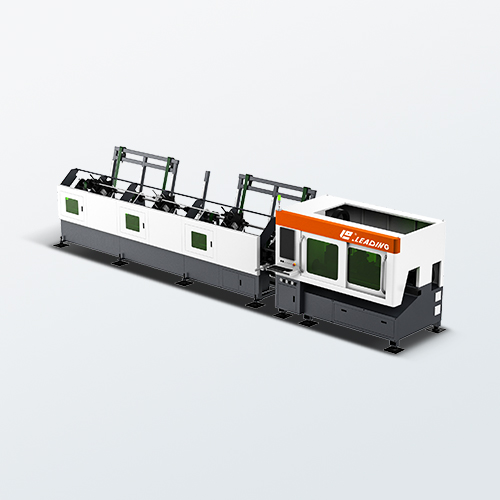
Laser Welding Machine Cost Ranges by Power, Automation, and Application Tier
A quality laser welding machine cost in 2026 isn’t a single figure—it reflects a hierarchy shaped by power output, automation level, and production role. Entry-level handheld fiber laser welders start around $4,700 and scale to $26,300 for high-end 2,000W models. Basic 500W fiber laser sources appear near $2,500 in select 2024 supplier listings, but these represent standalone components—not complete, safety-compliant systems. CNC laser welding workstations range from approximately $30,000 for 300W–500W units to over $150,000 for 1,000W–2,000W systems with integrated motion control and shielding gas management. Fully automated robotic laser welding cells sit at the top tier, typically costing $100,000 to $500,000+, depending on robot reach, payload capacity, and laser power (2,000W–6,000W). Combination laser cutter-welders occupy a flexible mid-to-high niche at $50,000–$200,000.
| Automation tier | Typical power | Price range | Application fit |
|---|---|---|---|
| Handheld manual | 800W–2,000W | $4,700–$26,300 | Small shops, on-site repair, jewelry |
| CNC workstation | 300W–2,000W | $30,000–$150,000+ | Medium-volume manufacturing, automotive parts |
| Robotic automated | 2,000W–6,000W | $100,000–$500,000+ | High-volume automotive, aerospace assembly |
| Combination cutter-welder | 500W–2,000W+ | $50,000–$200,000 | Job shops needing flexible multi-process work |
Power tier further refines value: low-power systems (≤1,000W) suit thin materials and lower-duty applications; medium-power (1,000W–2,000W) offers broader material and joint versatility; high-power (≥3,000W) enables deep-penetration welding on thick or reflective metals—but commands steep price premiums. Unlike fiber laser cutting machines optimized for flat-sheet throughput, welding system pricing rises more sharply with beam delivery precision, shielding gas integration, and real-time process control—factors that directly affect weld consistency and qualification time. Buyers should first define their application tier and required penetration depth before comparing quotes.
Key Price Drivers: Laser Source, Beam Quality, Brand Reputation, and Integration Complexity
Laser welding machine prices rarely hinge on one component. Four interdependent drivers—laser source origin, beam quality (BPP), supplier reputation, and integration complexity—can shift base pricing by 30–50% before adding options like safety enclosures, chillers, or custom tooling. A premium laser source paired with inadequate thermal management may underperform a mid-tier source backed by robust cooling and closed-loop software. That’s why buyers must evaluate the system—not just its spec sheet.
Industry pricing comparisons from 2025 show established Western suppliers often charge a 20–30% premium over value-tier Asian OEMs at equivalent power levels. Robotic and automated cells add another 15–25% premium when sourced from leading automation integrators—and dedicated engineering support can push integration costs an additional $5,000–$30,000 beyond the base quote.
Fiber laser source origin and reliability: IPG, TRUMPF, nLIGHT vs. value-tier Asian OEMs
The fiber laser source accounts for 20–30% of base price variance. Suppliers like IPG Photonics, TRUMPF, and nLIGHT command premiums due to field-proven reliability, tighter process controls, and global service infrastructure. Machines built with these sources often cost $18,000–$35,000 more than comparable-value alternatives—reflecting longer mean time between failures, consistent beam stability, and faster technical response. Value-tier sources can meet requirements for low-duty-cycle or non-critical applications, but buyers should verify warranty terms, module replacement cost, local spare part availability, and whether the OEM supports remote diagnostics and firmware updates.
Beam quality (BPP), cooling architecture, and control software impact on long-term ROI
Beam Parameter Product (BPP) is a direct predictor of weld performance: lower BPP enables tighter focus, deeper penetration, reduced spatter, and narrower heat-affected zones. But sustaining that performance requires matched engineering—especially in thermal management and real-time control. A high-BPP source paired with undersized cooling or open-loop software often degrades within 12–18 months, eroding initial savings through downtime and rework. Field service data from 2025 indicate that upgrading cooling systems and deploying intelligent control software (e.g., dynamic wobble, pulse shaping, seam tracking) improves uptime by 10–15%. These investments consistently deliver stronger ROI than shaving a few thousand dollars off the purchase price.
True Total Cost of Ownership: Installation, Facility Prep, Training, and Service Beyond Base Price
The quoted price of a laser welding machine represents only the visible portion of investment. Total Cost of Ownership (TCO) includes installation, facility modifications, operator training, software licensing, and service agreements. Across industrial equipment categories, the initial purchase price typically accounts for just 20–40% of five-year lifecycle costs—so overlooking auxiliary expenses distorts ROI analysis. Unlike basic fiber laser cutting machines, laser welding cells almost always require upgrades to electrical infrastructure, cooling loops, fume extraction, and laser safety systems before first-run qualification. Facility readiness alone demands coordinated planning with electricians, HVAC contractors, and certified Laser Safety Officers. Teams evaluating only sticker price risk unplanned change orders, delayed commissioning, and suboptimal first-year throughput. A realistic budget separates base equipment cost from site-specific and operational expenses—and early TCO modeling helps compare suppliers on value, not headline numbers. It also reveals whether a higher-quality machine with responsive service support delivers lower cost-per-welded-part over time.
Electrical, chiller, fume extraction, and safety enclosure upgrades
Laser welding systems demand stable three-phase power (typically 200–480 V), a dedicated circuit with disconnect switch, and voltage monitoring to minimize electrical noise and protect sensitive optics. Chillers must be sized for peak thermal load—with reserve capacity for ambient temperature fluctuations—to prevent thermal lensing and power drift. Fume extraction requires source-capture nozzles, properly sized ducting, and filters rated for fine metal particulates. A compliant safety enclosure—featuring interlocked doors, weld curtains, and integrated light curtains—is essential for regulatory alignment and personnel protection. Budget 10–25% above base price for these items, and conduct a pre-installation site inspection with utility drawings to avoid costly last-minute revisions.
Operator certification, software licensing, and 3-year service contracts
Operator skill directly affects weld repeatability, qualification success, and laser uptime. Initial training typically spans 40–80 hours covering operation, path programming, parameter optimization, and troubleshooting. In many regions—including the EU, UK, and U.S.—laser safety certification is mandatory for operators. Process control software (e.g., for weld monitoring, parameter archiving, or remote diagnostics) often requires annual licensing. A comprehensive 3-year service contract—covering preventive maintenance, laser source calibration, consumable replacements, and priority spare parts access—typically ranges from several thousand dollars for low-power systems to over $20,000 annually for high-power automated cells. Including these in the upfront budget prevents reactive repairs, extends system life, and safeguards production continuity.
How to Align Budget with Business Needs: Matching Machine Type to Production Volume and Part Complexity
Aligning laser welding investment starts with a clear production profile—not a feature wishlist. Shops already running fiber laser cutting machines sometimes assume higher wattage automatically improves welding throughput, but joint fit-up, material reflectivity, and part accessibility often influence cost more than raw power. Low-volume job shops producing prototypes or thin-gauge parts can succeed with a 1–1.5 kW handheld or manual workstation—prioritizing flexibility, ease of setup, and portability. Medium-volume operations producing 500–5,000 mixed-thickness parts per month benefit most from a 1.5–2 kW semi-automated system with stable beam quality, repeatable fixturing, and intuitive HMI. High-volume lines exceeding 5,000 repetitive parts per month require 2–3 kW+ automated cells with seam tracking, full safety enclosures, and PLC-level integration.
Part complexity acts as a budget multiplier: reflective alloys (e.g., copper, aluminum), tight-tolerance joints, or restricted-access geometries increase demand for advanced features like dynamic wobble, low-BPP optics, and responsive service support. Focus on effective throughput—parts per hour after accounting for changeover, maintenance, and operator loading—not nominal speed. A 4 kW system capable of deep penetration may be over-engineered if 80% of your work involves 0.8 mm stainless steel. Build in a 15–20% throughput buffer for seasonal or project-driven peaks—but avoid paying for automation you can’t consistently feed. Before purchase, model three-year labor, rework, and downtime savings. The right choice balances current volume with a realistic, measurable growth path.
FAQ
What are the key price ranges for laser welding machines?
The cost of a laser welding machine varies based on type and power output. Handheld manual welders cost $4,700–$26,300, CNC workstations range from $30,000–$150,000+, robotic automated systems are priced at $100,000–$500,000+, and combination cutter-welders range from $50,000–$200,000.
What factors influence the price of a laser welding machine?
Factors like the origin of the laser source, beam quality (BPP), supplier reputation, and integration complexity (e.g., cooling systems, software) impact the overall price. Additional costs may include safety enclosures, chillers, tooling, and service contracts.
What other costs should I consider besides the base price?
It's important to consider the Total Cost of Ownership, which includes installation, facility modifications, training, software licensing, safety enclosures, and long-term service agreements. These can account for an additional 20–40% of the overall investment over five years.
How does power level affect laser welding machine pricing and applications?
Low-power systems (≤1,000W) are suitable for thin materials, medium-power (1,000W–2,000W) accommodate broader materials, and high-power (≥3,000W) systems enable deep-penetration welding but come with higher costs.
What's the importance of beam quality (BPP) and cooling systems?
Beam quality affects weld precision and performance. A lower BPP ensures deeper penetration and less spatter, but this must be supported by efficient cooling architecture and intelligent control software to maintain long-term performance.
Table of Contents
- Laser Welding Machine Cost Ranges by Power, Automation, and Application Tier
- Key Price Drivers: Laser Source, Beam Quality, Brand Reputation, and Integration Complexity
- True Total Cost of Ownership: Installation, Facility Prep, Training, and Service Beyond Base Price
- How to Align Budget with Business Needs: Matching Machine Type to Production Volume and Part Complexity
- FAQ