
 EN
Why the Right Conversation Starts Before the Quote
A metal fabrication shop in Poland had run a 3kW fiber laser for six years. By early 2026 the machine still cut, but the shop had quietly stopped quoting jobs above 12 mm carbon steel. The owner called manufacturers only after losing an order that needed 20 mm plate and a 6 m bed. Two vendors quoted in ten days; neither could deliver in time. The lesson was not about price — it was about timing.
A shop in Vietnam did the opposite. Its production manager contacted a laser cutting machine manufacturer nine months before the old unit was due for replacement. That conversation produced a material-thickness audit, a tube-versus-plate decision, and a floor plan, so the machine arrived into a space that already fit.
The Real Cost of Asking Too Late
Waiting until a machine fails feels economical. It rarely is.
- Lead time is not delivery time. A configured laser metal cutting machine is built, tested, crated, and shipped. Add sea freight, clearance, and commissioning, and the calendar moves faster than most buyers expect.
- Emergency buying destroys negotiating position. When production has stopped, each hour of downtime pushes the buyer toward whatever is available, not whatever fits.
- Retrofits are not free. Adding automation, a second table, or a tube module after installation costs more than specifying it up front, and always costs downtime.
- Compliance is the hidden blocker. A machine without correct guarding, interlocks, and documentation can stall at customs or fail a safety inspection long after the invoice is paid.
There is a quieter risk too: sourcing from a trading company that cannot supply a control board three years later. Spare-part availability is a manufacturer question, not a price question.
The Technical Signals That Say "Start Now"
Timing is not a feeling. It shows up in numbers a shop already owns.
Material Mix and Maximum Thickness
List every material cut in the last twelve months and the thickest section of each. If more than 15% of jobs now sit within 2 mm of the machine's rated ceiling, the machine is already the constraint. A fiber laser cutting machine running at its limit produces slower cycles, rougher edges, and more rework.
Cutting Hours and Batch Patterns
Track actual beam-on hours per week. A shop that has moved from one shift to two, or from job-shop batches to repetitive runs, has outgrown manual loading. That is where automation and exchange tables stop being luxuries.
Part Geometry: Flat Sheet or Tube?
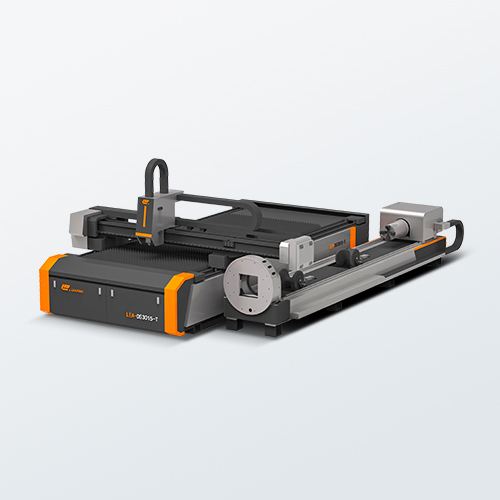
If enquiries increasingly involve tube, pipe, or structural profiles, a plate-only machine will keep losing those quotes. Combined platforms exist, but a tube laser cutting machine needs to be specified at the order stage, not bolted on later.
Accuracy Drift and Maintenance Frequency
Rising scrap rates, more frequent nozzle changes, and repeated re-alignment are early warnings. They signal that the machine's mechanical and optical condition is degrading, and that replacement planning should begin rather than end.
Power Headroom for the Next Three Years
Choose power against the material expected over the next three years, not only what is cut today. A machine specified for thin-gauge work becomes the bottleneck when the next contract asks for 16 mm or 20 mm.
What Standards and Safety Requirements Apply
Any serious manufacturer should discuss compliance without hesitation. A production laser needs Class 1 enclosure design under EN 60825-1 / IEC 60825-1, guarding and risk assessment under ISO 11553-1, and hazard classification, eyewear, and controlled areas under ANSI Z136.1. In the United States, point-of-operation guarding follows OSHA 29 CFR 1910.212 and maintenance follows the lockout/tagout rules of 1910.147. Control panels and emergency stopping should meet NFPA 79, and machines placed on the European market need CE marking supported by a technical file and Declaration of Conformity. A supplier who cannot explain how these apply to a specific model has not built for export markets.
A Practical Checklist Before Signing
Use this as a script for the first serious conversation.
- Define the job, not the machine. Bring a part list with material, thickness, and monthly volume.
- Ask for the cutting capability chart. Real charts show speed versus thickness per material, not one headline number.
- Confirm the enclosure and extraction design. Full-cover enclosures isolate the arc, contain fume, and cut eye and mechanical hazards.
- Verify the automation ceiling. Can the platform accept an exchange table, loading system, or tube module later?
- Request the spare-parts list. Nozzles, protective lenses, and ceramics should be catalogued with lead times.
- Ask who commissions the machine. Remote guidance, on-site engineers, and training should be defined before the order, including travel costs.
- Check the after-sales channel. A dedicated support group reachable by email and messaging matters more than a glossy brochure.
Inspection, Operation, and Maintenance Guidance
Good outcomes come from routine discipline, not the invoice. Inspect for transit damage before signing the delivery note and confirm the packing list. Before the first cut, verify the chiller, gas supply, and extraction are running and that the machine was tested at the factory. Daily checks cover the protective lens, nozzle, assist-gas pressure, and alignment. Weekly tasks include cleaning the bed and extraction ducting and checking chiller water. Annually, have optical and mechanical alignment verified and review interlocks against the original risk assessment.
When Working With a Manufacturer Makes the Difference
A manufacturer that owns its production chain can answer questions a reseller cannot: how the bed is welded, how the frame is stress-relieved, which control system is fitted, and how a spare will be sourced in year four. Leading (Shandong) CNC Equipment Co., Ltd., based in Jinan, runs its own riveting, welding, machining, sheet-metal, spraying, and assembly workshops across a 30,000 m² facility, shipping over 1,000 units a year to more than 20 countries. That vertical structure determines whether the machine still has a parts path long after the sales conversation ends.
The right time to contact a laser cutting machine manufacturer is not when the old machine dies. It is the moment the numbers stop matching the machine.
Frequently Asked Questions
How far in advance should a buyer contact a manufacturer?
Start six to nine months before installation. That window covers specification, factory build, testing, sea freight, customs, and commissioning. Shops replacing a failing machine should begin immediately, because compressed timelines usually mean accepting whatever configuration is available rather than the one that fits.
What is the difference between a manufacturer and a trading company?
A manufacturer controls production, so it can explain construction, adjust specifications, and supply spare parts over the machine's life. A trading company resells third-party equipment. Ask where the machine is built, who performs final testing, and who holds the spare-parts inventory.
Which certifications should a fiber laser cutting machine carry?
For export markets, look for CE marking with a Declaration of Conformity and evidence of design to EN 60825-1 and ISO 11553-1. In North America, expect compliance with ANSI Z136.1 and NFPA 79. Ask for documents, not verbal assurances.
How much power does a shop actually need?
Power should match the thickest material in the three-year plan, not just today's work. A 3kW machine handles thin sheet efficiently, while 6kW and above suit thicker plate and faster cycles. Request a capability chart showing speed against thickness for each material before deciding.
What maintenance does a laser metal cutting machine require?
Daily checks cover the protective lens, nozzle, and assist gas. Weekly tasks include cleaning the bed and extraction system and checking chiller water. Annual work involves verifying optical alignment and reviewing safety interlocks. A written schedule, agreed at purchase, prevents most unplanned downtime.
Does a manufacturer provide installation and training?
Most established manufacturers offer factory acceptance testing, remote pre-delivery guidance, on-site installation and commissioning, and operator training. Confirm what is included and who covers engineer travel and accommodation. A dedicated after-sales channel keeps support available after handover.