
 EN
EN
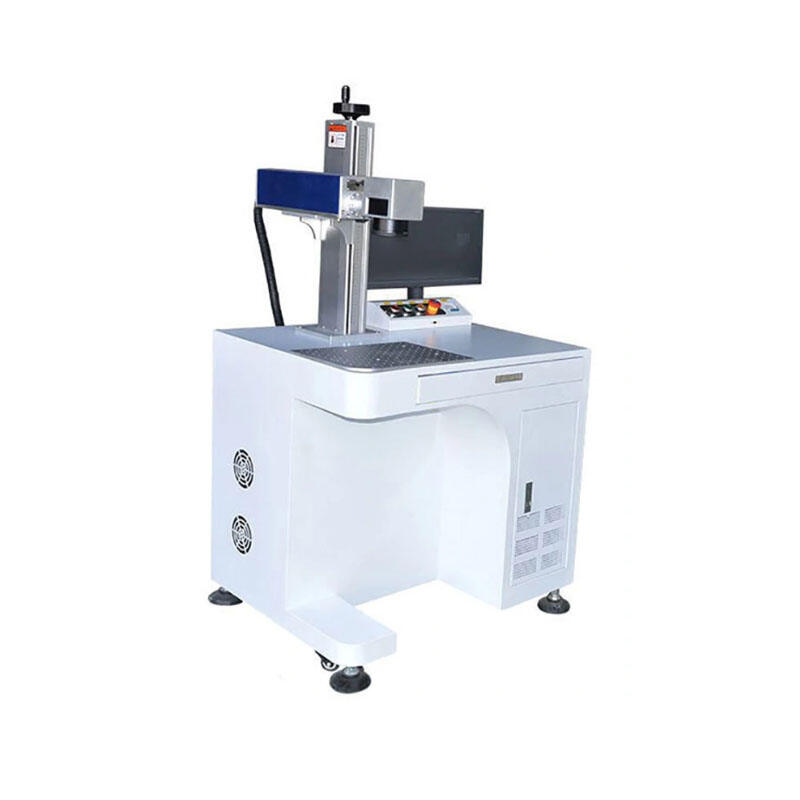
Modern manufacturing demands increasingly precise identification and traceability solutions, driving industries toward advanced marking technologies. Laser marking metal has emerged as the gold standard for creating permanent, high-quality markings on metallic surfaces across automotive, aerospace, medical device, and electronics sectors. This precision technology delivers unmatched accuracy while maintaining material integrity, making it indispensable for applications requiring durability and clarity.
Fundamentals of Precision Laser Technology
How Laser Physics Enables Microscopic Accuracy
The exceptional precision of laser marking metal stems from the fundamental physics of coherent light interaction with metallic surfaces. Laser systems generate highly focused beams with wavelengths specifically tuned to absorb efficiently into metal substrates. When photons strike the metal surface, they create localized thermal effects that modify the material structure without compromising surrounding areas. This precise energy delivery allows for controlled material removal, oxidation, or phase transformation at the microscopic level.
Fiber laser systems, commonly used for laser marking metal applications, operate at wavelengths around 1064 nanometers, which provides optimal absorption characteristics for most metallic materials. The beam diameter can be focused to spot sizes as small as 20 micrometers, enabling incredibly fine detail reproduction. Advanced beam shaping optics further enhance precision by creating uniform energy distribution across the focused spot, ensuring consistent marking quality even at high processing speeds.
Pulse Duration Control and Material Interaction
Precision in laser marking metal heavily depends on pulse duration control, which determines how energy is delivered to the material surface. Nanosecond pulse lasers provide excellent balance between marking speed and quality for most industrial applications. These short pulses minimize heat-affected zones while delivering sufficient energy for permanent marking. The precise timing allows operators to control penetration depth with micron-level accuracy.
Advanced laser systems incorporate sophisticated pulse modulation capabilities that adjust power, frequency, and duration in real-time. This dynamic control enables consistent marking quality across varying material thicknesses and surface conditions. The ability to fine-tune these parameters ensures that laser marking metal processes can accommodate different alloy compositions and surface preparations while maintaining exceptional precision standards.
Advanced Beam Control Systems
Galvanometer Scanning Technology
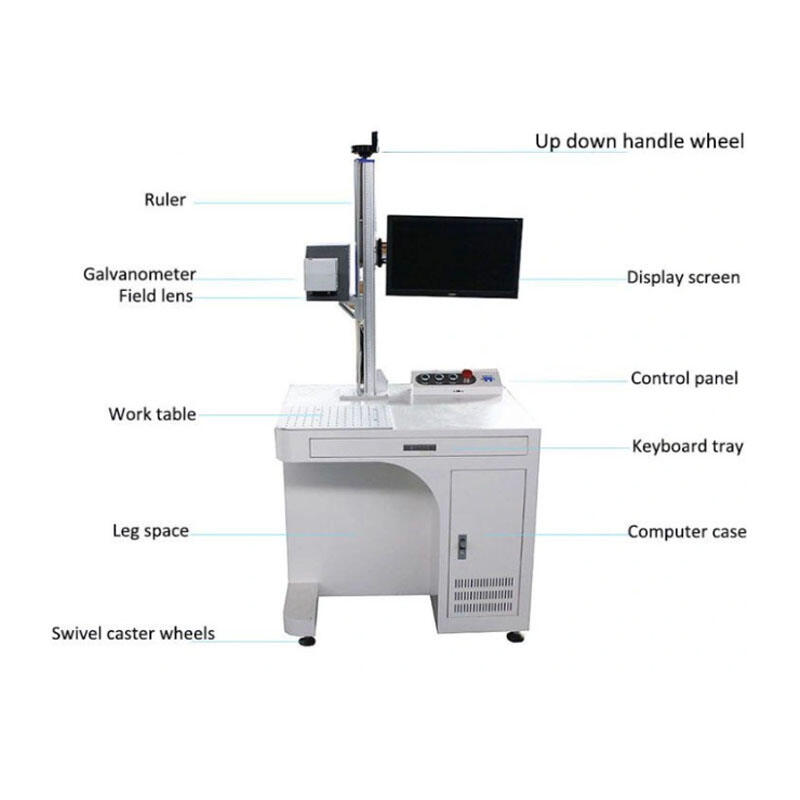
Modern laser marking metal systems utilize galvanometer-based scanning heads that provide exceptional positioning accuracy and repeatability. These high-speed mirrors can deflect laser beams with positioning resolution better than 1 micrometer while maintaining speeds exceeding 7,000 mm/second. The closed-loop feedback systems continuously monitor mirror positions, ensuring that marking patterns maintain dimensional accuracy throughout extended production runs.
The integration of advanced servo control algorithms enables predictive path optimization, reducing acceleration and deceleration effects that could compromise marking quality. Digital signal processing within galvanometer controllers compensates for mechanical variations and thermal drift, maintaining consistent performance regardless of environmental conditions. This technological sophistication directly contributes to the superior precision achievable in laser marking metal applications.
Beam Shaping and Focus Control
Precision beam shaping optics play a crucial role in achieving consistent laser marking metal quality across the entire working field. Variable beam expanders allow operators to optimize spot size for specific applications, while advanced F-theta lenses ensure uniform focus across flat marking surfaces. These optical systems minimize beam distortion and maintain consistent energy density distribution, critical factors for achieving precise marking results.
Dynamic focus control systems automatically adjust beam focus position during marking operations, compensating for part thickness variations and surface irregularities. Some advanced systems incorporate real-time height sensing that continuously adjusts focus position based on actual surface topology. This adaptive capability ensures that laser marking metal processes maintain optimal focus conditions throughout complex three-dimensional marking patterns.
Material Science Behind Precision Marking
Metallurgical Interactions and Surface Modification
The precision of laser marking metal processes depends fundamentally on understanding how laser energy interacts with different metallic crystal structures and surface compositions. When laser photons are absorbed by metal atoms, they create localized heating that can induce various metallurgical changes including grain boundary modification, phase transformation, and controlled oxidation. These precisely controlled material changes create permanent markings with exceptional durability and contrast.
Different metal alloys respond uniquely to laser irradiation, requiring specific parameter optimization for optimal results. Stainless steel develops distinctive color changes through controlled oxide layer formation, while aluminum alloys achieve contrast through localized anodization effects. Understanding these material-specific responses enables precise parameter selection that maximizes marking quality while minimizing unwanted metallurgical changes in surrounding areas.
Heat Affected Zone Minimization
Achieving precision in laser marking metal requires careful management of thermal effects to minimize heat-affected zones that could compromise part functionality. Advanced pulse control strategies distribute thermal energy temporally, allowing heat dissipation between pulses and preventing excessive temperature buildup. This thermal management approach maintains material properties in unmarked areas while creating distinct marking features.
Computational thermal modeling helps optimize laser parameters for specific applications, predicting temperature distributions and cooling rates during marking processes. These predictive capabilities enable operators to select parameters that achieve desired marking characteristics while maintaining tight control over thermal penetration depth. The result is precise marking that preserves the structural integrity of critical components.
Process Control and Quality Assurance
Real-Time Monitoring Systems
Modern laser marking metal systems incorporate sophisticated monitoring technologies that ensure consistent quality throughout production runs. Integrated photodiodes continuously measure laser power output, detecting variations that could affect marking quality. Advanced systems include spectroscopic monitoring that analyzes the plasma plume characteristics during marking, providing real-time feedback about process stability and marking quality.
Vision systems integrated with laser marking equipment enable automatic quality verification immediately after marking completion. High-resolution cameras capture detailed images of completed markings, while advanced image processing algorithms verify dimensional accuracy, contrast levels, and character legibility. This immediate feedback capability allows operators to make real-time adjustments, maintaining precision standards throughout extended production runs.
Environmental Control and Stability
Precision laser marking metal operations require careful environmental control to maintain consistent performance. Temperature fluctuations can affect laser output stability and optical component alignment, potentially compromising marking accuracy. Advanced systems incorporate active thermal management that maintains critical components within tight temperature ranges, ensuring consistent beam quality and positioning accuracy.
Vibration isolation systems protect sensitive optical components from external disturbances that could introduce positioning errors. Air filtration systems remove airborne particles that might interfere with beam propagation or contaminate marking surfaces. These environmental controls work together to create stable operating conditions that enable the exceptional precision characteristic of professional laser marking metal systems.
Applications Demanding Ultimate Precision
Medical Device Manufacturing
Medical device manufacturing represents one of the most demanding applications for laser marking metal technology, where precision directly impacts patient safety and regulatory compliance. Surgical instruments require markings that withstand sterilization cycles while maintaining legibility for traceability purposes. The precision of laser marking metal enables creation of microscopic identification codes and logos that resist corrosion and wear throughout the instrument lifecycle.
Implantable devices demand even higher precision standards, with markings that must not compromise biocompatibility or mechanical properties. Laser marking metal processes can create required identification information with penetration depths measured in micrometers, ensuring marking permanence while preserving surface finish quality critical for biological compatibility. The precise control available with modern systems enables compliance with stringent medical device regulations.
Aerospace Component Identification
Aerospace applications require laser marking metal capabilities that deliver exceptional precision under extreme operating conditions. Critical flight components need permanent identification that survives temperature cycles, vibration, and chemical exposure throughout service life. The precision achievable with laser marking systems enables creation of detailed traceability codes and part numbers that maintain legibility despite harsh environmental exposure.
Weight considerations in aerospace applications make laser marking metal attractive because it adds virtually no mass while providing permanent identification. The ability to create markings without material removal or addition preserves the carefully engineered weight distribution of critical components. Precision control ensures that marking processes do not introduce stress concentrations or surface irregularities that could compromise fatigue resistance.
Technological Innovations Enhancing Precision
Artificial Intelligence Integration
Emerging artificial intelligence technologies are revolutionizing precision control in laser marking metal applications. Machine learning algorithms analyze historical marking data to optimize parameter selection automatically for new jobs. These systems can predict optimal settings based on material type, thickness, and desired marking characteristics, reducing setup time while improving consistency across production batches.
AI-powered quality control systems continuously learn from marking outcomes, developing increasingly sophisticated understanding of the relationships between process parameters and final quality. This adaptive capability enables automatic compensation for gradual changes in system performance or material characteristics, maintaining precision standards throughout equipment lifecycle. The integration of artificial intelligence represents a significant advancement in achieving consistent, high-precision laser marking metal results.
Advanced Beam Delivery Systems
Recent developments in fiber optic beam delivery systems have enhanced the precision capabilities of laser marking metal equipment significantly. Single-mode fiber delivery maintains excellent beam quality over extended distances, enabling flexible system configurations without compromising marking precision. Advanced connector technologies ensure stable beam coupling with minimal power loss or beam distortion.
Hollow-core fiber technologies emerging in the market promise even better beam quality preservation, particularly important for ultra-precise laser marking metal applications. These advanced delivery systems maintain beam coherence and minimize thermal effects that could degrade marking quality. The improved beam stability translates directly into enhanced precision and consistency in final marking results.
FAQ
What factors determine the precision achievable in laser marking metal applications
The precision of laser marking metal depends on several key factors including beam quality, focusing optics, scanning system accuracy, and process parameter control. High-quality laser sources with excellent beam characteristics enable smaller focus spots and more controlled energy delivery. Advanced galvanometer scanning systems provide positioning accuracy better than 1 micrometer, while sophisticated control systems maintain consistent parameters throughout marking operations. Environmental factors such as temperature stability and vibration control also significantly influence achievable precision levels.
How does laser wavelength affect precision in metal marking applications
Laser wavelength directly impacts both absorption characteristics and achievable focus spot size in laser marking metal processes. Fiber lasers operating at 1064 nanometers provide excellent absorption in most metals while enabling very small focus spots due to the relatively short wavelength. The wavelength must match material absorption characteristics to ensure efficient energy transfer and precise control over marking depth and characteristics. Proper wavelength selection enables optimal precision while minimizing unwanted thermal effects in surrounding material.
What role does pulse duration play in achieving precise metal marking results
Pulse duration is critical for precision in laser marking metal because it controls how thermal energy is distributed temporally. Shorter pulses concentrate energy delivery, enabling precise material modification with minimal heat-affected zones. Nanosecond pulse durations provide excellent balance between marking speed and precision for most applications. The ability to control pulse duration precisely allows operators to optimize thermal effects for specific materials and marking requirements, achieving consistent results across varying conditions.
How do modern control systems enhance precision in laser marking metal operations
Modern control systems enhance laser marking metal precision through real-time parameter monitoring, adaptive process control, and sophisticated feedback mechanisms. Advanced systems continuously monitor laser power, beam position, and marking quality while making automatic adjustments to maintain consistent results. Integrated vision systems provide immediate quality verification, while predictive algorithms optimize marking paths for maximum accuracy. These control technologies work together to deliver precision levels that exceed traditional marking methods by significant margins.
Table of Contents
- Fundamentals of Precision Laser Technology
- Advanced Beam Control Systems
- Material Science Behind Precision Marking
- Process Control and Quality Assurance
- Applications Demanding Ultimate Precision
- Technological Innovations Enhancing Precision
-
FAQ
- What factors determine the precision achievable in laser marking metal applications
- How does laser wavelength affect precision in metal marking applications
- What role does pulse duration play in achieving precise metal marking results
- How do modern control systems enhance precision in laser marking metal operations