
 EN
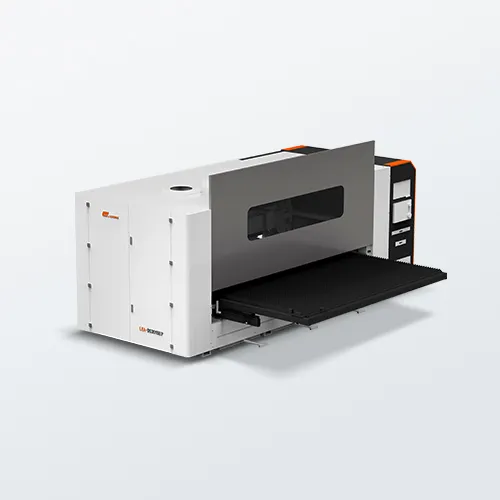
Key Cost Drivers for a Fiber Laser Cutting Machine
Several interdependent factors shape the cost of a fiber laser cutting machine, but three stand out: laser power, application scope, and total ownership burden. Understanding each helps buyers avoid overpaying for unused capacity or underestimating hidden integration and operating costs.
Laser Power (1–20 kW): Direct Impact on Cutting Speed, Thickness, and Price Tier
Laser power is the most direct cost driver. Higher kilowatt ratings allow faster cutting of thicker metal—but price does not scale linearly. A 1 kW system cuts up to ~6 mm stainless steel, while a 6 kW unit handles up to 25 mm (2025 industry specifications). Entry-level machines in the 1.5–6 kW range typically cost $8,000–$30,000; advanced 20 kW models commonly exceed $60,000. High-end industrial units with 3–30 kW outputs often start around $40,000 and rise sharply with source quality and automation. Buyers should match power to their thickest routine material: unused kilowatts increase capital cost, floor space, and electrical service demand. While power affects cycle time on common sheet thicknesses, real-world productivity also depends on assist gas settings, nozzle selection, and material type.
Application Scope: Sheet Metal Fabrication vs. Aerospace or Medical Precision Needs
Application scope determines machine configuration and price. Sheet metal fabrication shops often need 1–6 kW systems with standard tables and basic automation—the most affordable setups. Aerospace or medical parts demand tighter tolerances, superior edge quality, material traceability, and specialized fixtures or software. These requirements raise precision component costs, validation effort, and build quality. Medical device manufacturers may require clean cuts on thin titanium or stainless parts; aerospace suppliers often process aluminum or nickel alloys with strict documentation. Machines with dual cutting tables, robotic loading, or intelligent warehousing command significant premiums over single-table, manual-loading models. In many cases, a mid-power fiber laser with upgraded motion control and software delivers better value than a high-power machine lacking required accuracy. Buyers should define whether they need continuous high-volume cutting or occasional precision work before comparing prices.
Total Cost of Ownership Breakdown: Capital Expenditure vs. Installation, Training & Integration
The sticker price is only part of the investment. Total cost of ownership (TCO) includes capital expenditure, installation, training, integration with existing workflows, energy, assist gases, consumables, and maintenance. A table clarifies the major categories:
| Cost Category | Typical Items | Cost Behavior |
|---|---|---|
| Capital expenditure | Laser source, table, CNC, chiller, base machine | One-time; rises with power and table size |
| Installation & integration | Rigging, electrical, software setup, workflow changes | One-time; often 5–15% of machine price |
| Training | Operator and maintenance staff | One-time or ongoing; depends on automation |
| Consumables | Nozzles, lenses, filters | Moderate; lower than CO₂ or plasma |
| Energy & assist gas | Electricity, nitrogen/oxygen/air | Ongoing; fiber is more efficient than CO₂ |
| Maintenance | Preventive service, repairs | Ongoing; higher without strong source warranty |
For fiber lasers, energy and consumable costs are generally lower than CO₂ or plasma systems, but installation and software integration can surprise first-time buyers. Budgeting 10–20% above the base machine price for startup costs is a practical rule.
Power-to-Price Correlation and ROI Realities
Nonlinear Pricing Curve: Why 6 kW+ Fiber Laser Cutting Machines Carry Significant Premiums
A fiber laser cutting machine's price does not scale linearly with laser power. Entry-level 1–3 kW systems often fall between $80,000 and $150,000, while a 6 kW configuration typically ranges from $180,000 to $300,000. At 12 kW, prices commonly exceed $400,000. This stepwise jump reflects more than a larger laser source. Higher-power platforms require dual or multi-module resonators, upgraded chillers, reinforced gantries, and advanced CNC controls to maintain cutting accuracy at faster speeds. As a result, the incremental cost from 3 kW to 6 kW is proportionally larger than the move from 1 kW to 3 kW. Price per kilowatt declines, but the absolute capital premium rises sharply. Buyers should treat 6 kW+ as a distinct equipment class—not a simple wattage upgrade.
Beyond Horsepower: When Higher Power Fails to Deliver ROI Without Process Optimization
More kilowatts do not automatically create more profit. Cutting speed gains diminish on thin sheet metal because motion acceleration and part geometry often limit throughput before laser power does. A 2024 fabrication benchmark showed a 6 kW fiber laser cutting machine may be only 10–15% faster than a 4 kW unit on 0.060-inch mild steel, while assist gas consumption can rise by 30%. Without optimized nesting, automated loading, and operator training, the added capital cost simply increases idle time and depreciation. ROI improves when higher power is paired with high-volume material handling, low mix changeover time, and jobs that actually use thicker plate or high-pressure nitrogen cutting. Decision makers should evaluate process bottlenecks first; otherwise, purchasing more laser power becomes an expensive underutilized asset.
Operational Advantages That Offset Upfront Cost
Energy Efficiency, Minimal Consumables, and 100,000+ Hour Diode Lifespan vs. CO₂ or Plasma
A fiber laser cutting machine typically converts 30–50% of input power into cutting energy—compared with 10–15% for CO₂ systems and even lower for plasma. This efficiency lowers electricity cost per part and reduces cooling load. The solid-state design uses no laser gas refills or mirrors; consumables are mostly nozzles and protective lenses, which last far longer than plasma electrodes. Pump diodes in modern sources are rated for 100,000+ hours of operation, effectively eliminating source replacement over normal machine life. These savings often offset a higher initial purchase price within two to three years of multi-shift operation.
2026 Market Dynamics: Competitive Pressures, Regional Pricing, and Entry Barriers
The 2026 fiber laser cutting machine market is shaped by intensifying global competition, widening regional price gaps, and persistent entry barriers for new buyers. Industry pricing surveys from 2025 show that machines assembled in East Asia are often 20–35% less expensive than comparable European or North American models, reflecting differences in component sourcing, labor costs, safety certifications, and local service infrastructure. At the same time, competitive pressure has compressed margins on entry-level 1–3 kW systems, pushing manufacturers to differentiate through software, automation readiness, and warranty terms rather than hardware alone.
Consequently, buyers should evaluate total cost of ownership and local technical support—not just the initial purchase price. Entry barriers remain significant for smaller job shops: upfront capital, facility power requirements, operator training, and access to reliable spare parts can delay payback. In 2026, the most defensible purchasing strategy is to compare at least three regional suppliers, require documented cutting demonstrations on your specific material thickness, and negotiate service-level agreements before signing. This approach helps offset regional price differences and reduces the risk of hidden integration costs.
FAQs About Fiber Laser Cutting Machines
1. What is the primary cost driver for a fiber laser cutting machine?
Laser power is the most direct cost driver, as higher power means faster cutting and the ability to handle thicker materials, but it also substantially increases the cost of the machine.
2. What factors determine the total cost of ownership (TCO)?
The total cost of ownership includes not only the sticker price but also installation, training, integration, energy consumption, consumables, and ongoing maintenance costs.
3. Why are fiber laser cutting machines with power above 6 kW more expensive?
High-power machines require advanced components like multi-module resonators, enhanced CNC controls, and reinforced gantries, which significantly increase their cost compared to lower-power configurations.
4. Are fiber laser cutting machines more efficient than CO₂ systems?
Yes, fiber laser machines convert 30–50% of input power into cutting energy, compared to 10–15% for CO₂ systems, leading to lower energy and consumable costs.
5. What should buyers consider when deciding between machine power levels?
Buyers should align machine power with their specific applications—whether high-volume cutting, tight tolerances, or thicker materials—and evaluate their operational workflows to avoid overpaying for unused capacity.
Table of Contents
- Key Cost Drivers for a Fiber Laser Cutting Machine
- Power-to-Price Correlation and ROI Realities
- Operational Advantages That Offset Upfront Cost
- 2026 Market Dynamics: Competitive Pressures, Regional Pricing, and Entry Barriers
-
FAQs About Fiber Laser Cutting Machines
- 1. What is the primary cost driver for a fiber laser cutting machine?
- 2. What factors determine the total cost of ownership (TCO)?
- 3. Why are fiber laser cutting machines with power above 6 kW more expensive?
- 4. Are fiber laser cutting machines more efficient than CO₂ systems?
- 5. What should buyers consider when deciding between machine power levels?