
 EN
EN
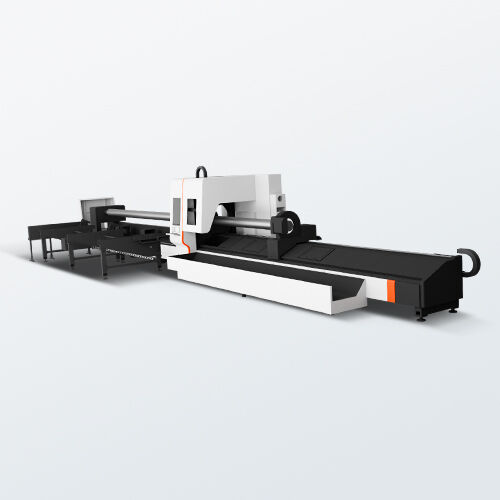
The manufacturing landscape is experiencing a significant transformation as advanced technologies reshape traditional production methods. Among these innovations, tube laser cutting has emerged as a revolutionary process that is gaining unprecedented popularity across various industries. This cutting-edge technology combines precision, speed, and versatility to deliver exceptional results in metalworking applications. As we progress through 2025, more manufacturers are recognizing the substantial advantages that tube laser cutting offers over conventional cutting methods. The technology's ability to process complex geometries, reduce waste, and improve overall efficiency has positioned it as a preferred solution for modern manufacturing challenges.
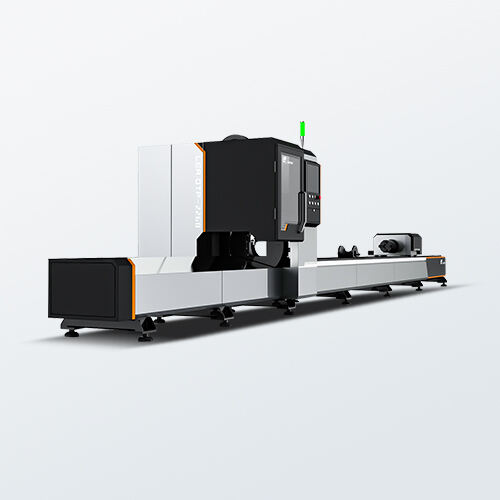
Advanced Technology Integration in Manufacturing
Precision Engineering Capabilities
Modern tube laser cutting systems incorporate sophisticated beam control mechanisms that deliver unmatched precision in material processing. These systems utilize high-powered fiber lasers that can achieve tolerances as tight as ±0.05mm, making them ideal for applications requiring exceptional accuracy. The precise nature of tube laser cutting eliminates the need for secondary finishing operations in many cases, reducing production time and costs significantly. Manufacturers can now produce complex components with intricate details that were previously impossible or extremely difficult to achieve using traditional cutting methods.
The integration of advanced CNC control systems with tube laser cutting technology has revolutionized the way manufacturers approach complex projects. These systems can process multiple tube profiles simultaneously, including round, square, rectangular, and irregular shapes with consistent quality. The technology's ability to maintain precise beam focus throughout the cutting process ensures uniform cut quality regardless of material thickness or tube diameter. This level of precision has made tube laser cutting indispensable in industries where component accuracy directly impacts product performance and safety.
Automation and Smart Manufacturing
The rise of Industry 4.0 has accelerated the adoption of automated tube laser cutting systems that integrate seamlessly with existing production lines. These advanced systems feature automatic material handling, real-time quality monitoring, and predictive maintenance capabilities that minimize downtime and maximize productivity. Smart sensors continuously monitor cutting parameters, adjusting laser power and speed automatically to maintain optimal performance across different materials and thicknesses. This automation reduces the dependency on skilled operators while ensuring consistent quality output.
Artificial intelligence and machine learning algorithms are now being integrated into tube laser cutting systems to optimize cutting paths and predict potential issues before they occur. These intelligent systems can analyze material properties, cutting requirements, and environmental conditions to determine the most efficient processing parameters. The result is improved cut quality, reduced material waste, and enhanced overall equipment effectiveness. Manufacturers using these advanced systems report significant improvements in production efficiency and reduced operational costs.
Economic Advantages and Cost Effectiveness
Material Optimization and Waste Reduction
Tube laser cutting technology excels in material utilization efficiency, achieving waste reduction rates of up to 90% compared to traditional cutting methods. The narrow kerf width produced by laser beams, typically ranging from 0.1mm to 0.3mm, minimizes material loss during the cutting process. Advanced nesting software optimizes tube layout to maximize material usage while maintaining structural integrity of the remaining skeleton. This efficiency translates directly into cost savings, particularly when working with expensive materials such as stainless steel, aluminum alloys, or exotic metals.
The precision of tube laser cutting eliminates the need for extensive pre-processing and post-processing operations, reducing overall production costs. Unlike mechanical cutting methods that may require deburring, grinding, or additional machining operations, laser-cut tubes often achieve the required surface finish directly from the cutting process. This reduction in secondary operations not only saves time and labor costs but also reduces the risk of dimensional variations that can occur during multiple handling operations. The economic benefits become particularly significant in high-volume production environments where even small per-unit savings can result in substantial cost reductions.
Return on Investment Considerations
The initial investment in tube laser cutting equipment is offset by substantial long-term savings in operational costs, material consumption, and labor requirements. Modern systems demonstrate typical payback periods of 18 to 36 months, depending on production volume and application complexity. The reduced tooling costs associated with tube laser cutting provide additional economic advantages, as the technology eliminates the need for expensive dies, punches, and cutting tools that require regular replacement and maintenance. This tooling independence allows manufacturers to respond quickly to design changes without incurring additional tooling costs.
Energy efficiency improvements in modern tube laser cutting systems have further enhanced their economic appeal. Contemporary fiber laser sources achieve wall-plug efficiencies exceeding 30%, significantly reducing electricity consumption compared to older CO2 laser systems. The reduced energy consumption, combined with lower maintenance requirements and improved reliability, contributes to a lower total cost of ownership. Manufacturers report operational cost reductions of 40-60% when transitioning from traditional cutting methods to advanced tube laser cutting systems.
Industry Applications and Market Growth
Automotive and Transportation Sector
The automotive industry has become one of the largest adopters of tube laser cutting technology, driven by the need for lightweight, high-strength components that meet stringent safety and performance requirements. Tube laser cutting enables the production of complex exhaust systems, chassis components, and structural elements with precise dimensional accuracy and excellent surface finish. The technology's ability to process various materials, including advanced high-strength steels and aluminum alloys, aligns perfectly with the automotive industry's material diversification trends. Electric vehicle manufacturers particularly benefit from tube laser cutting capabilities when producing battery enclosures and thermal management systems.
Aerospace applications have embraced tube laser cutting for manufacturing critical components such as hydraulic lines, fuel systems, and structural supports. The technology's ability to maintain tight tolerances while processing thin-walled tubes makes it ideal for weight-sensitive aerospace applications. Quality traceability features integrated into modern tube laser cutting systems ensure compliance with stringent aerospace quality standards. The non-contact nature of laser processing eliminates mechanical stresses that could compromise material properties, making it suitable for processing heat-treated and age-hardened aerospace alloys.
Construction and Architecture
The construction industry has witnessed increased adoption of tube laser cutting for producing architectural elements, structural components, and decorative features. Complex building designs requiring intricate metalwork benefit from the technology's ability to create precise joints, decorative patterns, and custom profiles. Tube laser cutting enables architects and designers to realize ambitious concepts that would be prohibitively expensive or impossible to achieve using conventional fabrication methods. The technology's versatility in processing various tube sizes and materials makes it suitable for everything from large structural beams to delicate ornamental elements.
Infrastructure projects increasingly rely on tube laser cutting for producing specialized components such as bridge elements, pipeline fittings, and transportation structures. The technology's ability to process large-diameter tubes and thick-walled materials makes it suitable for heavy construction applications. Precise cutting capabilities ensure proper fit-up of welded joints, reducing assembly time and improving structural integrity. The consistent quality achieved through tube laser cutting contributes to longer service life and reduced maintenance requirements for infrastructure components.
Technological Innovations and Future Developments
Beam Delivery and Control Systems
Recent advances in beam delivery systems have significantly improved the capabilities and reliability of tube laser cutting equipment. Fiber optic beam delivery provides superior beam quality consistency and eliminates the alignment issues associated with traditional mirror-based systems. Advanced beam shaping technologies allow operators to optimize beam characteristics for specific materials and cutting conditions, improving cut quality and processing speed. Dynamic focus control systems automatically adjust beam position and diameter throughout the cutting process, maintaining optimal performance across varying tube geometries and wall thicknesses.
Innovative multi-axis cutting heads enable simultaneous processing of multiple surfaces and complex three-dimensional cuts that were previously impossible. These advanced systems can perform bevel cutting, compound angles, and intricate hole patterns in a single setup, reducing handling time and improving dimensional accuracy. Real-time beam monitoring systems continuously assess beam quality and automatically compensate for variations, ensuring consistent cutting performance throughout production runs. These technological improvements have expanded the application range of tube laser cutting into previously inaccessible market segments.
Software Integration and Digital Manufacturing
Advanced CAD/CAM software integration has streamlined the programming and operation of tube laser cutting systems, reducing setup time and minimizing programming errors. Intelligent nesting algorithms automatically optimize cutting sequences to minimize processing time while maintaining material utilization efficiency. Simulation capabilities allow operators to verify cutting programs and identify potential issues before actual production begins, reducing material waste and preventing costly mistakes. Cloud-based software solutions enable remote monitoring and optimization of multiple tube laser cutting systems from centralized locations.
Digital twin technology is beginning to transform tube laser cutting operations by creating virtual models that mirror real-world system performance. These digital replicas enable predictive maintenance, process optimization, and quality assurance without interrupting production. Machine learning algorithms analyze cutting data to identify patterns and recommend process improvements, continuously enhancing system performance over time. Integration with enterprise resource planning systems provides real-time production visibility and enables data-driven decision making throughout the manufacturing organization.
Quality and Performance Benefits
Surface Finish and Edge Quality
Tube laser cutting consistently produces superior edge quality compared to mechanical cutting methods, with smooth, oxide-free surfaces that often eliminate the need for secondary finishing operations. The precise heat input control characteristic of laser processing minimizes heat-affected zones, preserving material properties adjacent to the cut edge. Advanced gas assist systems optimize the cutting environment to achieve different surface finishes and edge characteristics depending on application requirements. Nitrogen assist cutting produces bright, oxidation-free edges suitable for welding applications, while oxygen assist cutting can achieve faster processing speeds for structural applications.
The repeatability of tube laser cutting ensures consistent edge quality across entire production runs, reducing variability and improving assembly processes. Dimensional accuracy is maintained even when processing thin-walled tubes that might distort under mechanical cutting forces. The ability to achieve different edge preparations, including chamfers, bevels, and complex profiles, adds value to cut components and reduces downstream processing requirements. Quality control systems integrated into modern tube laser cutting equipment provide real-time monitoring of cut quality parameters, ensuring consistent output quality.
Processing Speed and Efficiency
Modern tube laser cutting systems achieve remarkable processing speeds while maintaining exceptional quality, with cutting rates reaching several meters per minute depending on material type and thickness. Rapid acceleration and deceleration capabilities minimize non-productive time between cuts, maximizing overall throughput. Advanced motion control systems coordinate all machine axes simultaneously, enabling complex cutting paths to be executed efficiently without sacrificing accuracy. The ability to process multiple features in a single pass, including holes, slots, and contours, further enhances productivity compared to traditional multi-step processes.
Continuous operation capabilities of modern tube laser cutting systems enable 24-hour unmanned production with automatic material handling and part removal systems. Quick-change fixtures and automatic tube loading systems minimize setup time between different jobs, improving overall equipment utilization. The flexibility to process various tube sizes and materials without extensive retooling makes tube laser cutting ideal for both high-volume production and custom fabrication applications. Manufacturers report productivity improvements of 200-400% when transitioning from conventional cutting methods to optimized tube laser cutting processes.
FAQ
What materials can be processed using tube laser cutting technology
Tube laser cutting technology can process a wide range of metallic materials including carbon steel, stainless steel, aluminum alloys, brass, copper, and various exotic alloys. The technology is particularly effective with materials ranging from 0.5mm to 25mm wall thickness, depending on the laser power and material type. Non-ferrous materials like aluminum and copper require specialized cutting parameters and gas assist systems to achieve optimal results. Recent advances have expanded capabilities to include processing of coated materials, pre-painted tubes, and composite metal structures while maintaining cut quality and minimizing thermal effects.
How does tube laser cutting compare to traditional cutting methods in terms of accuracy
Tube laser cutting achieves significantly higher accuracy than traditional mechanical cutting methods, with typical tolerances of ±0.05mm to ±0.1mm compared to ±0.5mm or greater for conventional methods. The non-contact nature of laser processing eliminates tool wear and mechanical deflection issues that affect dimensional accuracy in traditional cutting. Advanced beam control and motion systems maintain consistent accuracy throughout the entire cutting process, regardless of tube length or complexity. Real-time monitoring and feedback systems automatically compensate for thermal effects and mechanical variations, ensuring dimensional stability across production runs.
What factors should be considered when investing in tube laser cutting equipment
Key investment considerations include production volume requirements, material types and sizes to be processed, required cutting accuracy, and available floor space. Laser power selection should be based on the thickest materials and fastest cutting speeds required for your applications. Integration capabilities with existing production systems and software compatibility are crucial for seamless workflow implementation. Operating costs including electricity consumption, maintenance requirements, and consumables should be evaluated alongside initial equipment costs to determine total cost of ownership and return on investment timeframes.
How has tube laser cutting technology evolved to meet modern manufacturing demands
Modern tube laser cutting systems have evolved to incorporate advanced automation, artificial intelligence, and Industry 4.0 connectivity features that weren't available in earlier generations. Fiber laser sources have largely replaced CO2 lasers, providing higher efficiency, lower maintenance, and improved beam quality. Advanced software integration enables seamless workflow from design to production with automatic nesting, real-time monitoring, and predictive maintenance capabilities. Recent developments in multi-axis cutting heads and dynamic beam control have expanded processing capabilities to include complex three-dimensional cuts and specialized edge preparations that meet increasingly sophisticated manufacturing requirements.
Table of Contents
- Advanced Technology Integration in Manufacturing
- Economic Advantages and Cost Effectiveness
- Industry Applications and Market Growth
- Technological Innovations and Future Developments
- Quality and Performance Benefits
-
FAQ
- What materials can be processed using tube laser cutting technology
- How does tube laser cutting compare to traditional cutting methods in terms of accuracy
- What factors should be considered when investing in tube laser cutting equipment
- How has tube laser cutting technology evolved to meet modern manufacturing demands