
 EN
EN
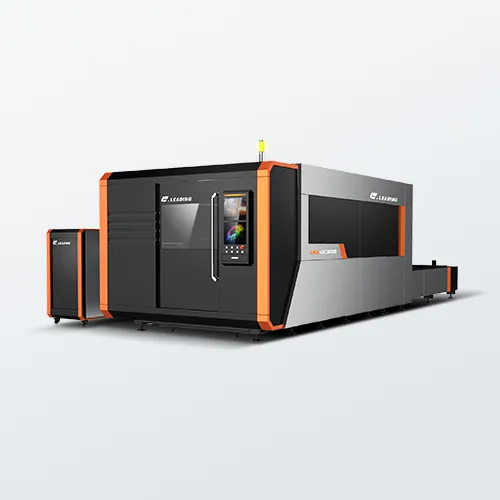
Deconstructing Capital Investment in Industrial Laser Technology
Selecting a commercial CNC fiber laser cutting system is a high-stakes capital procurement decision that shapes a manufacturing enterprise's operational capacity and profit margins for a decade. In the modern sheet metal and fabrication industries, workshop owners often face a classic paradox: whether to prioritize absolute laser source wattage or invest heavily in proprietary control software.
While maximizing raw power looks appealing on engineering brochures, long-term profitability relies on a balanced machinery ecosystem. True operational efficiency is dictated by features that guarantee structural stability, automated workflow integration, and a low total cost-per-part under continuous multi-shift production.
Optoelectronic Stability and Dynamic Beam Profiling
The laser source functions as the primary engine of a thermal cutting system, but its raw wattage must be closely aligned with material specialization rather than theoretical maximums. Deploying low-to-medium power (1kW to 3kW) is optimal for thin-gauge fabrication, whereas medium-to-thick plate processing demands high-power architectures to maintain consistent edge quality and minimize secondary grinding operations.
However, the power source must be paired with an advanced, fully automated cutting head equipped with real-time autofocusing sensors. This optoelectronic integration allows the machine to modulate focal positions dynamically based on material metallurgy and sheet thickness. For workshops frequently transitioning between carbon steel, stainless steel, and high-reflectivity alloys like aluminum or copper, this capability eliminates manual calibration bottlenecks, protecting cutting lenses from thermal damage while stabilizing the manufacturing cycle.
Structural Rigidity and Stress-Relieved Bed Design
Optoelectronic excellence yields poor results if a machine's mechanical foundation cannot withstand the intense dynamic forces generated by high-speed acceleration. High-performance industrial laser cutters require heavy-duty, heat-treated welded steel frames or stress-relieved cast iron beds. Premium manufacturing processes involve strict thermal treatment and vibration aging cycles to eliminate residual mechanical stresses within the steel, ensuring the chassis resists deformation over decades of continuous operation.
Lightweight, thin-walled frame alternatives often experience harmonic vibrations during high-acceleration motion (exceeding 1.2G). This structural instability transfers directly to the cutting path, creating micro-deviations and serrated edges on finished workpieces. To counter this, modern heavy-duty machines utilize high-rigidity gantries fabricated from aviation-grade aluminum alloys, successfully balancing structural strength with low inertia to guarantee micron-level repeating accuracy.
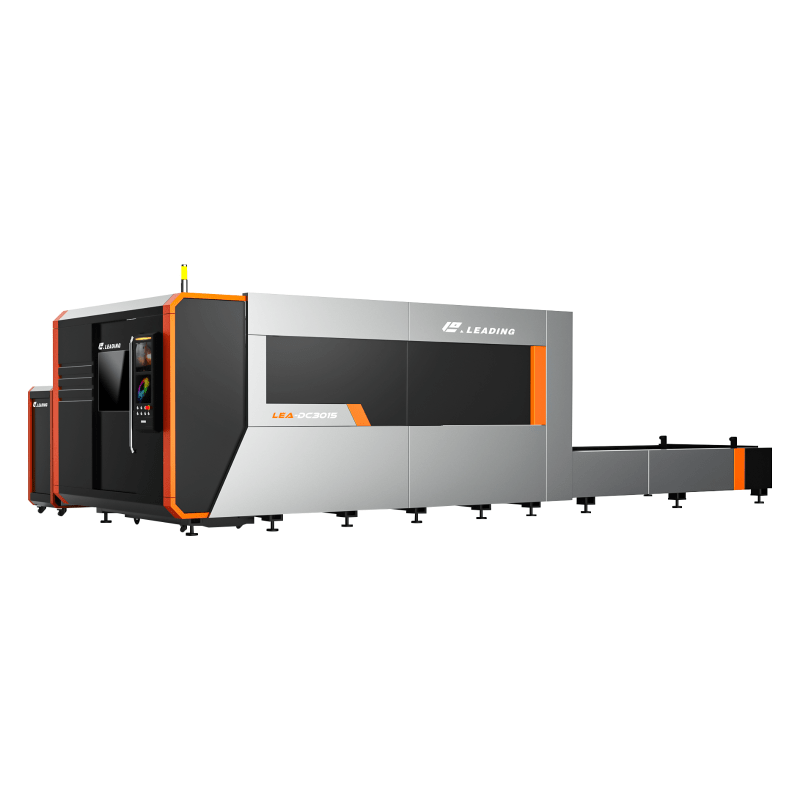
Software Intelligence and vision-Based Nesting Algorithms
The financial viability of a metal laser cutter is heavily influenced by the capability of its CNC control architecture. Modern industrial processing software functions as more than a simple human-machine interface; it acts as an automated optimization cell. A critical feature driving modern manufacturing profitability is intelligent nesting software driven by visual recognition.
Advanced control systems feature integrated vision sensors that scan irregular scrap metal sheet remnants, allowing the software to automatically nest complex geometric paths directly onto leftover raw material. This automated scrap utilization directly reduces material expenditures—a significant financial advantage amid fluctuating global metal pricing. Furthermore, automated functions like one-click edge-seeking and adaptive beam calibration allow workshops to maintain peak throughput independent of operator skill levels, minimizing human error and maximizing machine utilization.
Closed-Loop Safety Enclosures and Zoned Extraction Systems
Industrial professionalism requires that high-output manufacturing never compromises workshop safety protocols. Operating high-power systems involves Class 4 industrial lasers, making fully enclosed safety housings a operational necessity to shield personnel from hazardous scatter radiation and stray reflections.
In tandem with optical safety, handling the microscopic dust, particulate matter, and fumes generated during high-temperature metal vaporization is critical. Modern laser machinery integrates highly efficient, zoned dust extraction systems where specialized exhaust valves follow the movement of the cutting head in real time. This targeted ventilation prevents hazardous particulate buildup, protects sensitive linear guides and optical components from contamination, and drastically reduces the hidden overhead associated with component degradation and premature lens failure.
5. High-Dynamic Motion Components and Kinematic Reliability
The ultimate velocity and long-term accuracy of a laser cutting cycle depend on its underlying drive mechanics. Achieving fluid, high-acceleration cutting requires a synchronized motion system comprised of high-torque servo motors paired with precision-ground helical gear racks.
The synergy between motor torque curves and gear pitch tolerances dictates a machine's kinematic reliability over time. While baseline systems may deliver precise cuts during initial commissioning, maintaining consistent structural tolerances after thousands of operational hours requires premium linear guidance components. Investing in durable motion systems prevents mechanical backlash and guide wear, transforming a standard fabrication tool into a high-uptime, revenue-generating industrial asset designed for 24/7 continuous manufacturing.
Conclusion: Securing a Balanced Production Ecosystem
A successful procurement strategy treats a metal laser cutting machine not as a collection of isolated specifications, but as a holistic production ecosystem. True operational value lies at the intersection of optoelectronic stability, rigid mechanical structures, automated control software, and active environmental safety. By prioritizing these integrated structural features over raw power metrics or low upfront pricing, fabrication enterprises optimize their capital investments, securing reliable operational longevity and a highly competitive manufacturing architecture.
Table of Contents
- Deconstructing Capital Investment in Industrial Laser Technology
- Optoelectronic Stability and Dynamic Beam Profiling
- Structural Rigidity and Stress-Relieved Bed Design
- Software Intelligence and vision-Based Nesting Algorithms
- Closed-Loop Safety Enclosures and Zoned Extraction Systems
- 5. High-Dynamic Motion Components and Kinematic Reliability
- Conclusion: Securing a Balanced Production Ecosystem