
 EN
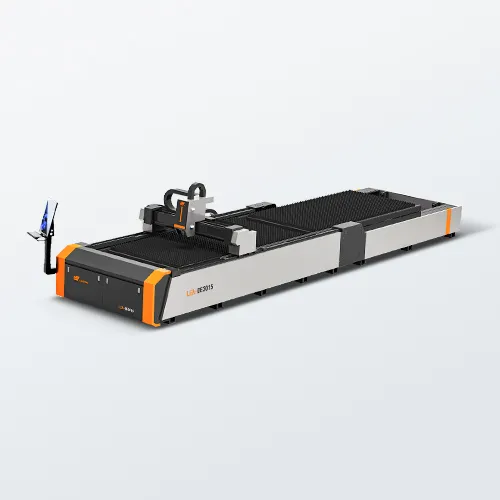
Laser Cutting Machine: The Gold Standard for Precision Stainless Steel Fabrication
Laser cutting is the preferred method when edge quality, repeatability, and minimal post-processing are critical—especially for stainless steel. Success hinges on managing the material’s unique thermal and optical behavior.
Overcoming Stainless Steel Challenges: Reflectivity, Thermal Conductivity, and Oxide Formation
Stainless steel presents three interrelated challenges that must be controlled for clean, consistent cuts. First, its high reflectivity—particularly at wavelengths above 1 µm—can reduce laser absorption and risk back-reflection damage to optics. Fiber lasers operating near 1 µm achieve significantly higher absorption than CO₂ systems, making them the standard for stainless steel fabrication.
Second, stainless steel’s moderate thermal conductivity (e.g., ~16 W/m·K for 304) pulls heat away from the cut zone. Without sufficient power density, the kerf widens, dross forms, and edge roughness increases—especially in thicker sections.
Third, chromium oxide forms almost instantly on heated surfaces. With a melting point higher than the base metal, this layer impedes melt ejection and causes discoloration or incomplete penetration. Precise focus control, optimized peak power, and pulse shaping keep the oxide layer thin and the heat-affected zone minimal—delivering narrow kerfs, low burr, and often eliminating secondary finishing.
Without these controls, excessive heat input can warp thin sheet or drastically slow throughput on thick plate. That’s why laser cutting consistently outperforms mechanical alternatives where surface integrity and dimensional accuracy are non-negotiable.
Optimizing Key Parameters: Assist Gas (N₂ vs. O₂), Nozzle Standoff, and Power Calibration
Parameter selection directly determines edge appearance, dross formation, and process efficiency. Nitrogen assist gas shields molten stainless from oxidation, yielding clean, silver-colored edges ideal for food-grade, medical, and architectural applications—but requires higher pressure and slower speeds beyond 3 mm thickness. Oxygen assist leverages exothermic reaction to boost cutting speed in thicker sections (6–25 mm), though it leaves a dark, hard oxide layer typically requiring pickling or grinding.
Nozzle standoff must remain tightly controlled between 0.5 mm and 1.5 mm: too large weakens gas flow and promotes dross; too small invites spatter damage to the lens. Power calibration follows thickness and alloy grade—thin sheet demands lower average power with high-frequency pulsing to avoid burn-through, while thick plate needs sustained high power and reduced travel speed.
Because surface condition, mill finish, and alloy variations shift optimal settings, test cuts on scrap remain the most reliable way to finalize parameters. Many shops document proven recipes in a shared cutting database—reducing setup time and eliminating repeated trial runs. This disciplined approach ensures consistent heat input, edge color, and part quality across production runs.
Mechanical Cutting Tools: Cost-Effective Alternatives for Low-Volume or Thick-Section Work
Blade Selection Guide: Matching Tool Type (Snips, Shears, Band Saws) to Stainless Thickness (0.5–12 mm)
Stainless steel’s work hardening and toughness demand careful tool selection. For sheet under 1.2 mm, manual snips offer speed and portability but may deform edges. Bench or lever shears provide cleaner straight cuts up to 3 mm, while powered guillotine shears extend capability to ~6 mm with excellent repeatability for high-volume straight-line work.
For thicker sections, curved profiles, or structural shapes, band saws with bimetal blades deliver versatility from 3 mm through 12 mm and beyond. Use 14–18 TPI blades for thin-walled tubing and 6–10 TPI for solid plate to balance tooth engagement and chip clearance.
While mechanical tools reduce capital cost and simplify field or low-volume operations, they lack the precision, complexity handling, and edge consistency of a laser cutting machine—making them complementary rather than competitive for high-tolerance fabrication.
| Tool type | Typical stainless thickness | Best use |
|---|---|---|
| Manual snips | 0.5–1.2 mm | Tight curves, light-gauge sheet |
| Bench/lever shear | 1.0–3.0 mm | Straight cuts, moderate edge finish |
| Powered guillotine shear | up to 6.0 mm | Straight cuts, repeatability |
| Band saw | 3.0–12 mm+ | Thick plate, pipe, profiles |
Plasma and Angle Grinder Solutions: Portability and Flexibility for Field and Repair Applications
Plasma Cutter Performance on Stainless Pipes and Tubing by Wall Thickness and Alloy Grade
Plasma cutting fills a vital niche where fixed laser systems are impractical—especially for on-site repair, maintenance, or fabrication of stainless pipes and tubing. Performance depends closely on wall thickness and alloy composition.
Thin-wall austenitic tubing (<3 mm) is prone to top-edge rounding and dross unless using low-amperage, high-speed settings with nitrogen or argon-hydrogen shielding gas. At 6–12 mm wall thickness, 80–120 A air plasma systems cut 304 and 316 stainless effectively—but increased amperage raises heat-affected zone size and edge hardness. Duplex and high-nickel alloys require slower travel speeds or preheat to prevent hydrogen-assisted cracking.
Always match nozzle orifice size and standoff distance to thickness, verify bevel angle after initial cuts, and fine-tune gas pressure to minimize oxide scale on the cut face.
Angle Grinder Safety and Wheel Selection: Abrasive vs. Diamond Wheels for Stainless Steel
Angle grinders deliver unmatched portability for cutting, beveling, and finishing stainless pipe ends and small repairs—but safety and wheel selection are critical. Use dedicated stainless-steel abrasive discs to avoid carbon steel contamination, which leads to rust and corrosion failure. Thin (1 mm or 1.6 mm) abrasive wheels cut faster and generate less heat, reducing burr and distortion.
Diamond wheels cut cooler and last longer—ideal for repetitive stainless work—but require rigid mounting and higher upfront investment.
Always use the manufacturer-recommended guard, ANSI-rated face shield, cut-resistant gloves, and hearing protection. Secure the workpiece firmly, allow the tool to reach full speed before contact, and let the wheel do the work—never force the cut. Excessive pressure increases kickback risk, overheating, and wheel fracture.
Safety, Stability, and Surface Integrity: Non-Negotiable Supporting Equipment
Safe, repeatable stainless steel fabrication depends as much on supporting equipment as on the primary cutting tool. While the laser cutting machine defines the cut profile, auxiliary systems determine whether output remains safe, stable, and corrosion-resistant.
Fume control and PPE: Stainless steel contains chromium, and thermal cutting can release hexavalent chromium (Cr(VI)). OSHA sets an 8-hour time-weighted average exposure limit of 5 µg/m³ (OSHA 29 CFR 1910.1026). Effective local exhaust ventilation, a properly fitted N95 or P100 respirator, fire-resistant clothing, face shield, and cut-resistant gloves are mandatory—not optional.
Stability: Vibration or movement during cutting degrades edge quality and risks tool damage. Adjustable roller stands, mechanical clamps, and non-marring V-blocks maintain alignment. For thin sheets (<2 mm), downdraft tables or vacuum fixtures stabilize the workpiece and suppress warping around the kerf.
Surface integrity: Cross-contamination from carbon steel tools introduces free iron, triggering rust and compromising passivation. Maintain strict separation: use dedicated stainless wire brushes, flap wheels, and grinding discs. After abrasive work, apply passivation gel or citric acid-based pickling solution—and protect finished edges with plastic guards until installation.
FAQ Section
What are the advantages of laser cutting for stainless steel?
Laser cutting provides high precision, consistent edge quality, minimal post-processing, and repeatability. These factors make it ideal for high-tolerance applications.
Why is chromium oxide an issue during stainless steel laser cutting?
Chromium oxide forms quickly on heated surfaces and has a high melting point, which hinders melt ejection and can cause discoloration or incomplete cuts. Optimized focus and power control are necessary to counteract this.
When should nitrogen assist gas be used in laser cutting?
Nitrogen is used for applications requiring clean, silver-colored edges and non-oxidized cuts, such as food-grade, medical, or architectural parts. However, it is less efficient for thick sections.
What are some alternatives to laser cutting for stainless steel fabrication?
Alternatives include mechanical tools like snips, shears, or band saws for lower-volume work or plasma cutters and angle grinders for portable applications and repairs.
What precautions should be taken when using angle grinders for stainless steel?
Use stainless-specific abrasive discs to avoid contamination, follow safety protocols with appropriate PPE, and avoid excessive force while cutting to prevent risks like kickback or overheating.
Table of Contents
- Laser Cutting Machine: The Gold Standard for Precision Stainless Steel Fabrication
- Mechanical Cutting Tools: Cost-Effective Alternatives for Low-Volume or Thick-Section Work
- Plasma and Angle Grinder Solutions: Portability and Flexibility for Field and Repair Applications
- Safety, Stability, and Surface Integrity: Non-Negotiable Supporting Equipment
-
FAQ Section
- What are the advantages of laser cutting for stainless steel?
- Why is chromium oxide an issue during stainless steel laser cutting?
- When should nitrogen assist gas be used in laser cutting?
- What are some alternatives to laser cutting for stainless steel fabrication?
- What precautions should be taken when using angle grinders for stainless steel?