
 EN
EN
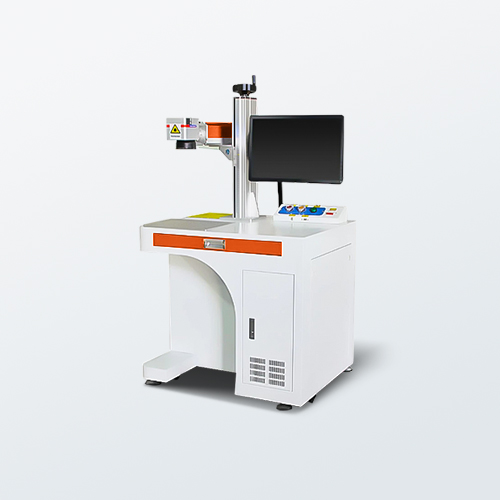
Evaluating Capital Expenditures in Laser Procurement
For manufacturing enterprises expanding their metal fabrication capabilities, procuring an industrial CNC fiber laser cutting machine represents a critical capital expenditure decision. In the global machine tool marketplace, procurement teams frequently encounter an overwhelming variance in capital quotes, making it essential to look beyond the initial purchase price to understand the engineering and structural variables that drive long-term asset value. A sophisticated fiber laser cutting system is not a static commodity; it is a dynamic industrial asset whose initial investment must be scientifically weighed against its total cost of ownership and multi-shift operational reliability. True financial efficiency is achieved only when manufacturing facilities align their upfront budgets with structural longevity, optoelectronic stability, and predictable maintenance schedules.
1. Primary Engineering Cost Drivers and Component Lifecycle
The financial valuation of an industrial laser metal cutter is determined by a synchronized combination of optoelectronic capacity, structural layout, component metallurgy, and motion mechanics. Laser wattage remains a primary differentiator of baseline machinery costs, where lower-wattage systems are tailored for thin-gauge sheet metal processing to balance cost with operational economy, while ultra-high-power architectures are engineered for heavy-duty fabrication where high energy density is essential to vaporize thick plates rapidly without structural edge deformation. Furthermore, the structural format of the machine bed heavily influences the quote architecture, meaning that a basic open-frame configuration involves minimal material overhead and lower initial costs, whereas an integrated system featuring a fully enclosed safety housing and automated dual-exchange worktables increases the capital investment while dramatically multiplying machine uptime and ensuring strict compliance with international radiation safety protocols. Crucially, the selection of core sub-systems—including the light source, CNC controller, automatic cutting head, and servo drives—directly determines technical longevity, meaning that integrating components from globally recognized engineering brands adds a standard premium to the initial cost but successfully eliminates the risk of premature component degradation and unpredictable kinematic tolerances.
2. Analytical Capital Categorization in the Modern Market
While individual custom configurations prevent a single universal price sheet, the international laser processing market is structured into distinct technical tiers that reflect specific production capabilities. Lower-tier platforms typically feature lower-wattage open frames with basic control logic, making them suitable for small-scale prototype workshops or thin-gauge fabrication where continuous high-speed execution is not an operational necessity. As enterprises scale, they generally transition to mid-range commercial platforms that utilize semi-enclosed or fully enclosed chassis equipped with automated exchange tables and balanced power outputs, representing the standard workhorse for expanding metal fabrication businesses that require a balance between capital efficiency and reliable daily throughput. At the peak of the market are industrial-grade automated systems that combine maximum wattage power sources, full closed-loop safety enclosures, dual worktables, and intelligent material handling integration, which are fully optimized for heavy manufacturing environments where maximizing linear cutting feeds directly impacts bottom-line profitability. Purchasing directly from established manufacturers backed by international standard compliance lowers long-term operational risks, ensuring a more favorable asset depreciation curve across the equipment lifecycle.
3. Mitigating Operational Expenditures and Long-Term Risks
A precise procurement strategy recognizes that the initial capital layout is only the baseline layer of a machine's financial lifecycle, and maximizing return on investment requires accounting for ongoing operational expenditures. Continuous high-performance cutting requires regular consumption of auxiliary processing gases alongside optical consumables like protective windows and cutting nozzles, but systems that integrate intelligent automation features, such as vision-based automatic nozzle changers, mitigate these costs by optimizing gas delivery profiles and reducing operator intervention errors. Furthermore, industrial electricity consumption increases with high-power configurations, meaning that selecting machinery with energy-efficient idle modes and optimized power conversion metrics is essential to control monthly utility overhead. Ultimately, the real value of a premium laser cutting asset is validated during unexpected production bottlenecks, where relying on unverified or low-tier equipment manufacturers frequently introduces hidden operational penalties through prolonged technical downtime and scarce component replacement chains, whereas partnering with an established global direct-to-factory manufacturer ensures access to verified component tracing, responsive lifecycle engineering support, and rapid parts distribution.
Conclusion: Calibrating Initial Investment with Lifecycle Value
In the modern fabrication ecosystem, evaluating the cost of a quality metal laser cutting machine is a process of balancing performance metrics against total operational expenditure. Prioritizing low procurement quotes without analyzing underlying mechanical rigidity, software optimization, and after-sales reliability creates long-term financial liabilities. By systematically aligning capital allocation with material realities, technical capacity, and factory automation goals, manufacturing enterprises secure an asset that optimizes processing efficiency while driving down the long-term cost-per-part.