
 EN
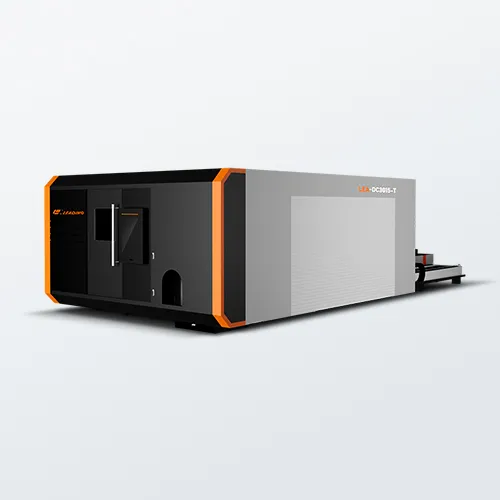
Precision and Cut Quality: Why Fiber Laser Cutting Excels for Metal
Precision and cut quality are the primary reasons metal fabricators choose fiber laser technology for high-tolerance work. Two factors—tolerance and kerf width, and heat-affected zone—determine whether a cutting process meets demanding specifications.
Tolerance, Edge Finish, and Kerf Width: Achieving ±0.05 mm Accuracy and <0.2 mm Kerf with a Metal Laser Cutting Machine
Fiber laser cutting stands out in precision metal fabrication because its focused beam maintains a small spot size and stable motion control. A metal laser cutting machine routinely holds dimensional tolerance of ±0.05 mm on sheet metal up to 10 mm thick—far tighter than plasma cutting, which typically stays within ±0.5 mm. This level of accuracy is essential for parts that must fit together without post-cut grinding, such as enclosures, brackets, and precision weldments.
Kerf width provides a direct measure of cut precision. Fiber laser systems produce kerf widths below 0.2 mm on 1–5 mm mild steel and stainless steel, while plasma kerf ranges from 1.0 mm to 3.0 mm and waterjet from 0.5 mm to 1.5 mm. The narrower fiber kerf reduces material waste and allows denser part nesting. Crucially, fiber laser’s superior beam quality maintains kerf consistency across the entire cutting bed—a key advantage for large-format sheets.
| Cutting Technology | Typical Tolerance | Typical Kerf Width |
|---|---|---|
| Fiber laser | ±0.05 mm | <0.2 mm |
| Plasma | ±0.5 mm | 1.0–3.0 mm |
| Waterjet | ±0.1 mm | 0.5–1.5 mm |
Edge finish also improves: fiber-cut edges show minimal dross, low roughness in the Ra 3.2–6.3 µm range, and usually require little deburring. A 2024 metal fabrication benchmark reported that fiber laser cutting reduced secondary finishing time by up to 40% compared with plasma on 3 mm steel. In contrast, plasma cutting’s wider kerf and angular deviation on thick material often require secondary machining. The combination of tight tolerance, narrow kerf, and clean edge lowers scrap and rework—supporting consistent first-pass yield and shorter lead times for high-mix, high-precision shops.
Minimal Heat-Affected Zone (<0.1 mm) Preserves Metallurgical Integrity—Critical for Aerospace and Medical-Grade Metal Parts
The heat-affected zone (HAZ) is the layer of material whose microstructure changes due to cutting heat. Fiber laser cutting keeps HAZ extremely small—typically below 0.1 mm—because its 1 µm wavelength is absorbed more efficiently by metals, concentrating energy in a tiny spot. This localized heat input limits grain growth, hardness changes, and distortion near the cut edge. In contrast, plasma cutting often produces HAZ of 0.5 mm to 1.0 mm, and oxy-fuel cutting can exceed 1.5 mm on thick steel.
For aerospace components, a large HAZ can reduce fatigue strength and corrosion resistance. For medical-grade stainless steel and titanium implants, preserving the original alloy properties is a regulatory and safety requirement. A 2023 metallurgical study on 316L stainless steel found that fiber-cut edges retained tensile strength within 2% of the base material, while plasma-cut edges showed a 7% reduction due to HAZ effects. By keeping HAZ under 0.1 mm, fiber laser cutting helps fabricators meet AS9100 and ISO 13485 process controls without additional thermal treatment—reducing the need for post-cut annealing or edge machining, shortening production cycles, and preserving material certification.
Speed, Thickness Limits, and Material Suitability Across Technologies
High-speed performance on thin-to-mid thickness metals: 20–40 m/min on 1 mm stainless steel with a metal laser cutting machine
Speed is a decisive factor in high-mix metal fabrication. A metal laser cutting machine delivers clear advantages on thin-to-mid thickness stock, where fiber laser systems routinely achieve 20–40 m/min on 1 mm stainless steel while maintaining clean edge quality. This performance stems from high beam quality, rapid pierce cycles, and dynamic motion systems that minimize non-cutting time. On 3 mm mild steel, cutting speeds remain several times faster than plasma—and significantly faster than waterjet, especially on intricate profiles with many starts and stops.
Within this speed range, controlled heat input keeps distortion low and preserves narrow kerf. The practical benefit is higher throughput per shift without sacrificing dimensional accuracy. For fabricators handling sheet metal parts, brackets, enclosures, and thin structural components, this speed translates directly into lower labor cost per part. While waterjet and plasma may remain competitive in narrow niche thickness bands, fiber laser offers the best balance of feed rate, edge finish, and process stability for thin-to-mid metals—making it the default choice for high-volume precision cutting.
Thickness trade-offs: Optimal up to 25 mm mild steel (fiber), superior beyond 30 mm (plasma), and unlimited—but slower—thickness (waterjet)
Material thickness changes the economics and quality envelope of each process. Fiber laser cutting is most productive on mild steel up to about 25 mm, where it maintains narrow kerf and high edge quality. Beyond 30 mm, plasma cutting becomes superior for speed and cost—especially on heavy structural steel where surface finish is less critical. Waterjet cutting offers virtually unlimited thickness capability and avoids heat input, but its speed drops significantly on thick sections and complex geometries.
| Technology | Optimal thickness range | Key advantage | Main limitation |
|---|---|---|---|
| Fiber laser | Up to 25 mm mild steel | High precision, fast on thin-to-mid stock | Slower beyond 30 mm |
| Plasma | Beyond 30 mm | Fast thick-section cutting | Lower precision, larger kerf |
| Waterjet | Virtually unlimited | No heat-affected zone, broad material range | Slowest on thick sections |
This trade-off means metal fabricators should align machine selection with their dominant material thickness. A shop running 1–12 mm stainless and mild steel gains the most from fiber laser speed and quality. A heavy structural fabricator cutting 40 mm plate will likely favor plasma, while waterjet remains the best option for heat-sensitive alloys or very thick stacks. Matching the technology to the thickness range prevents overpaying for capability or underdelivering on quality.
Total Cost of Ownership and Operational Fit for B2B Metal Fabricators
Lower TCO of fiber laser cutting: No consumables, no tooling wear, and 30% less power consumption than plasma per cut meter
When metal fabricators compare total cost of ownership, a metal laser cutting machine often moves the economic focus beyond initial purchase price. Fiber laser cutting uses no consumable electrodes, nozzles, or swirl rings like plasma, and eliminates abrasive media and high-pressure pump maintenance common to waterjet. A 2023 industry benchmark reports about 30% less electrical energy per cut meter than plasma on equivalent mild steel. Because the beam does not contact the workpiece, there is no tooling wear—reducing spare parts inventory and unscheduled downtime. Over a five-year lifecycle, lower consumable, energy, and labor costs can offset the higher acquisition cost, yielding a lower TCO for high-mix and high-volume sheet metal production.
Strategic application alignment: High-precision, high-volume metal parts (fiber), heavy structural steel (plasma), non-conductive or heat-sensitive materials (waterjet)
Aligning the cutting method to the job prevents excess operational cost. Fiber laser cutting is most economical for high-precision, high-volume metal parts up to about 25 mm, where tight kerf and automated loading reduce per-part cost. Plasma remains the practical choice for heavy structural steel above 30 mm because its thickness capability avoids multiple passes or preheating. Waterjet handles non-conductive or heat-sensitive materials without thermal distortion, though operating cost is higher. The table below summarizes the operational fit.
| Application | Recommended method | Key reason |
|---|---|---|
| High-precision, high-volume metal parts up to about 25 mm | Fiber laser | Thin kerf, fast speed, automation-ready, no tooling wear |
| Heavy structural steel above 30 mm | Plasma | Deep thickness capability with lower capital cost for thick sections |
| Non-conductive or heat-sensitive materials | Waterjet | Cold cutting, no heat-affected zone, broad material versatility |
This alignment keeps high-precision volume work with fiber, heavy plate with plasma, and heat-sensitive or non-conductive jobs with waterjet.
FAQ Section
What is the main advantage of fiber laser cutting over plasma cutting?
Fiber laser cutting excels in precision, narrower kerf widths, and minimal heat-affected zones, making it ideal for high-tolerance metal fabrication.
What thickness range is optimal for fiber laser cutting?
Fiber laser cutting is most effective on mild steel up to 25 mm and is ideal for thin-to-mid thickness metals.
How does fiber laser cutting reduce total cost of ownership?
Fiber laser cutting eliminates consumable parts, reduces energy consumption by 30%, and avoids tooling wear, making it cost-effective over time.
Why is heat-affected zone important in cutting processes?
The heat-affected zone can alter material properties, impacting fatigue strength and corrosion resistance. Fiber laser cutting minimizes HAZ to preserve metallurgical integrity.
What cutting method works best for thick structural steel?
Plasma cutting is superior for thick structural steel above 30 mm due to its speed and cost-effectiveness.
Which method is optimal for heat-sensitive or non-conductive materials?
Waterjet cutting is ideal as it uses cold cutting and avoids heat input, preserving material properties.
Table of Contents
- Precision and Cut Quality: Why Fiber Laser Cutting Excels for Metal
- Speed, Thickness Limits, and Material Suitability Across Technologies
- Total Cost of Ownership and Operational Fit for B2B Metal Fabricators
-
FAQ Section
- What is the main advantage of fiber laser cutting over plasma cutting?
- What thickness range is optimal for fiber laser cutting?
- How does fiber laser cutting reduce total cost of ownership?
- Why is heat-affected zone important in cutting processes?
- What cutting method works best for thick structural steel?
- Which method is optimal for heat-sensitive or non-conductive materials?