
 EN
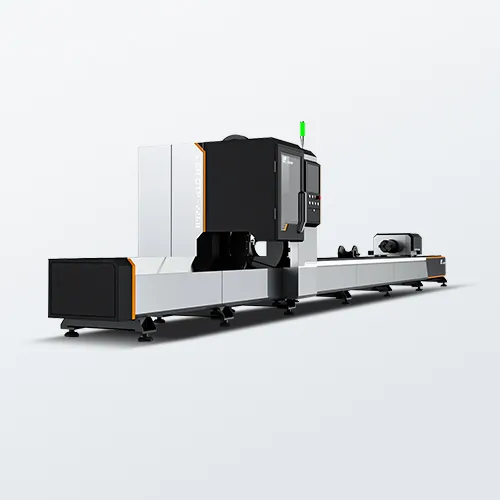
Evaluating Financial Readiness: ROI, TCO, and Break-Even Timing
Calculating True Total Cost of Ownership for a Laser Cut Machine
A realistic return on investment (ROI) for a laser cut machine starts with total cost of ownership (TCO), not the sticker price. Buyers must account for installation, exhaust or filtration systems, software licenses, operator training, and facility modifications—such as dedicated circuits or compressed air upgrades—alongside the purchase price. Recurring costs include electricity, assist gas, lenses, nozzles, belts, and preventive maintenance.
| Cost type | Examples |
|---|---|
| One-time | Purchase price, installation, ventilation, software, training |
| Recurring | Electricity, assist gas, consumables, maintenance, replacement parts |
In many small shops, annual operating expenses add 15–25% of the machine’s purchase price (2026 fabrication cost benchmarks). Hidden long-term costs—like tube or power supply replacement every three to five years, unplanned downtime, or end-of-life disposal—also belong in the TCO model. A practical five-year formula is:
TCO = purchase price + installation + training + (annual operating cost × years of use) + disposal
Using this, a $12,000 machine with $3,000 in annual operating expenses exceeds $27,000 over five years. Comparing TCO across two or three models—not just list prices—prevents under-budgeting and reveals true cost competitiveness.
How Many In-House Jobs Justify the Investment? A Realistic Break-Even Analysis
Break-even occurs when gross profit from in-house jobs covers all fixed and variable ownership costs—not just the machine’s price. Begin by calculating monthly ownership cost: loan or lease payment, software subscriptions, allocated maintenance, and floor space overhead. Divide that total by the average gross profit per job (after materials and direct labor). For example, a $15,000 machine financed at $300/month plus $150 in overhead requires $450 in monthly gross profit. If a typical custom job yields $60 after materials, the shop needs roughly 8 such jobs per month to break even.
Many small fabricators reach this threshold quickly—especially when replacing outside cutting fees of $150–$400 per job. According to a 2026 small-manufacturing cost survey, typical break-even occurs within 18–24 months when weekly cutting demand exceeds 20 hours. Below that volume, outsourcing often remains more economical.
Laser Cut Machine vs. Outsourcing or Legacy Methods: When Automation Pays Off
Outsourcing a sheet metal or acrylic part typically costs $3–$8 per part for small batches. In-house laser cutting reduces variable cost to $0.50–$2.00 per part—covering only materials, power, and assist gas. The crossover point is the monthly volume where in-house total cost falls below vendor invoices.
Legacy methods like manual cutting or die stamping add labor, tooling, scrap, and setup delays. In-house laser cutting pays off most decisively when jobs require frequent design revisions, short lead times, or low-volume repeatability. In one documented 2026 case, a shop spending $1,200/month on outsourced cutting recovered its $12,000 machine investment in under a year—by bringing just 150 parts per month in-house.
The break-even volume isn’t fixed; it depends on part geometry, material thickness, local outsourcing rates, and labor efficiency. Automation is justified when the monthly outsourcing bill consistently exceeds the machine’s monthly TCO.
Operational Impact: How a Laser Cut Machine Transforms Workflow Efficiency
Precision, Consistency, and Waste Reduction: Quantifying Quality Gains
Adopting a laser cut machine improves dimensional accuracy and repeatability—directly reducing scrap, rework, and secondary finishing. Advanced nesting software can reduce material waste by up to 20%, according to a Journal of Manufacturing Processes study (2026). Companies implementing optimized laser workflows report up to 30% higher productivity versus traditional methods, per the International Laser Manufacturing Summit (2026).
Fiber laser systems maintain consistent cut quality across long production runs—critical for high-mix environments. Tighter tolerances and cleaner edges lower labor content in deburring and inspection. Less manual marking and measurement also cuts error rates. To capture these gains, track first-pass yield, scrap rate, and setup time before and after implementation. Without baseline metrics, improvements remain anecdotal. A focused pilot on a few representative part families usually clarifies whether precision gains justify the operational shift.
Seamless CAD/CAM and ERP Integration for End-to-End Digital Manufacturing
Value multiplies when the laser system integrates directly with CAD/CAM and ERP platforms. Design files flow automatically into CAM software, which generates tool paths, nests parts, and selects parameters—eliminating manual programming and shortening setup. ERP integration updates job status, material availability, and production schedules in real time, enabling responsive scheduling and accurate quoting.
This digital thread—from quote to finished part—reduces data entry errors, accelerates order changes, and unlocks common-line cutting and auto-nesting for better material utilization. Even basic CAD-to-CAM integration helps small manufacturers eliminate duplicate drawings and version confusion. Industry case studies show 15–25% higher machine utilization after integration (2026).
To begin, select a machine with open software interfaces—and verify your ERP supports BOM and routing imports. Integration isn’t just an IT initiative; it’s the primary driver of speed-to-value and ROI acceleration.
Strategic Fit: Identifying the Right Business Profile for a Laser Cut Machine
A laser cut machine is not a universal solution. It delivers strongest ROI for businesses that regularly process sheet materials, require repeatable accuracy, or manage high-mix jobs with tight deadlines. If most work involves thick plate, bulk low-precision cutting, or infrequent one-offs, outsourcing may remain more practical.
The clearest ownership candidates include:
- Custom fabrication and prototyping shops needing fast design-to-part cycles
- Signage, display, and furniture makers working with acrylic, wood, or mixed materials
- Metal job shops with recurring orders for brackets, enclosures, or decorative panels
- Maintenance and repair operations that cut replacement parts on demand
These profiles benefit most when material types and thicknesses are predictable. A shop primarily cutting 3–6 mm acrylic or 1–5 mm mild steel can select a focused power range—avoiding unnecessary cost for unused capability. If material demand shifts weekly, flexibility matters more than peak wattage.
Operational readiness matters as much as market demand. In-house laser cutting succeeds only when someone can maintain the machine, prepare CAD files, and follow safety protocols. Without that foundational skill base, the asset risks sitting idle. Businesses with a mature digital design workflow, stable order volume, and a defined material niche are best positioned to convert the investment into sustainable margin gains.
FAQ
What is the Total Cost of Ownership (TCO) for a laser cut machine?
TCO includes the purchase price, installation, training, operating costs, and disposal expenses. Over five years, it typically exceeds the machine’s sticker price by adding annual costs like electricity, assist gas, consumables, and maintenance.
How do I calculate the break-even point for a laser cut machine?
Break-even is reached when gross profit from in-house jobs equals your fixed and variable ownership costs. Calculate this by dividing monthly ownership costs by average gross profit per job.
When does in-house production become more economical than outsourcing?
In-house production becomes cost-effective when the monthly outsourcing expense eclipses the total operating cost (TCO) of owning and running a laser cut machine.
Is a laser cut machine suitable for all businesses?
Not necessarily. The machine is ideal for businesses needing precise and repeatable cutting for specific materials, such as custom fabrication shops, signage makers, and maintenance operations. For bulk low-precision cutting or infrequent jobs, outsourcing could be more practical.
How does ERP and CAD/CAM integration enhance laser cut machine usage?
Integration automates workflows by linking design files to manufacturing and ERP systems. It reduces errors, accelerates order changes, and improves material utilization, leading to higher machine efficiency and faster ROI.