
 EN
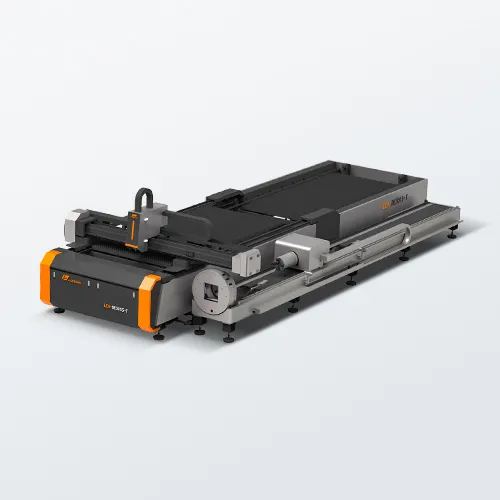
Designing Precision Laser Cutting Machine Systems
Integrating Core Subsystems: Laser Source, Beam Delivery, Motion Platform, and CNC Control
A laser cutting machine is a coordinated assembly of four interdependent subsystems: laser source, beam delivery, motion platform, and CNC control. The laser source generates a stable, high-power-density beam; beam delivery—via mirrors or fiber optics—guides it precisely to the cutting head. The motion platform positions either the workpiece or cutting head along X, Y, and Z axes with sub-50 µm repeatability, while the CNC translates CAD geometry into synchronized tool paths. Critical integration ensures real-time coordination of beam position, focus height, and assist gas timing. Modern systems achieve positioning accuracy near ±0.025 mm, with high-end platforms reaching ±0.01 mm (2026). This tight coupling enables sharp corners, fine features, and complex contours—repeatedly and reliably. To minimize vibration and thermal drift, manufacturers simulate servo dynamics and thermal load before physical assembly. Each subsystem must be specified for the intended power range and duty cycle: misalignment—even with a premium laser source—leads directly to taper, dross, or edge roughness. The result is a unified system where optical path integrity, motion dynamics, and software interpolation converge to deliver stable precision across sheet metal, structural tube, and 3D contoured parts.
Material-Optimized Engineering: Nozzle Design, Assist Gas Integration, and Thermal Management
Material behavior dictates nozzle geometry, assist gas selection, and thermal control strategy. Mild steel cuts fastest with oxygen—leveraging its exothermic reaction—while stainless steel and aluminum require nitrogen to prevent oxidation and ensure clean, oxide-free edges. Nozzle design governs standoff distance and gas flow pattern, enabling efficient ejection of molten material without destabilizing the cut front. Thermal management becomes essential for thick sections and highly reflective metals like copper or brass. Water-cooled cutting heads, shielded optics, and controlled purge air protect against spatter, back-reflection, and lens contamination. In thin sheet (<3 mm), high-pressure nitrogen and small-diameter nozzles enhance edge quality at speed; in thick plate (>15 mm), larger nozzles and lower gas pressure maintain kerf stability. Real-time sensor feedback adjusts focus, gas pressure, and feed rate as material thickness or surface condition varies. This layer of material-aware engineering transforms a generic beam source into a production-ready system capable of repeatable edge quality—from 0.5 mm stainless to 25 mm carbon steel—without manual re-tuning.
Selecting and Tuning Laser Technology for Industrial Applications
Fusion vs. Ablative Cutting: Matching Physics to Material—Metals, Composites, and Polymers
Laser cutting systems are engineered around two fundamental material removal mechanisms: fusion cutting and ablative cutting. Fusion cutting melts the material using a focused beam, then ejects molten material with high-pressure assist gas—typically nitrogen for non-oxidizing cuts or oxygen for reactive cutting of mild steel. It delivers high-speed, high-quality results on most metals. Ablative cutting uses ultra-short pulses and high peak power density to vaporize material directly, minimizing heat transfer. This mode is critical for thermally sensitive materials like carbon fiber composites, laminated polymers, and medical-grade plastics—where delamination, charring, or micro-cracking must be avoided. Manufacturers tune pulse duration, wavelength, focal spot size, nozzle standoff, and gas flow to match the thermal conductivity, reflectivity, and phase-change behavior of each substrate. The outcome is not a one-size-fits-all beam—but a purpose-built process that follows material physics, not vice versa.
Fiber vs. CO₂ Lasers: Performance Trade-offs in Sheet Metal, Thick Alloys, and Non-Metals
Fiber lasers (emitting near 1064 nm) offer superior absorption in metals—including reflective alloys like aluminum and copper—and dominate thin-to-medium sheet metal applications with faster speeds and lower operating costs. CO₂ lasers (operating near 10.6 µm) remain more effective on non-metals such as wood, acrylic, glass, and many engineered plastics due to higher absorption at longer wavelengths. While CO₂ historically held an edge in cutting very thick alloys (25 mm) with smoother top-edge finish, modern multi-kilowatt fiber lasers now match or exceed that performance in most industrial settings. Key distinctions include:
| Attribute | Fiber laser | CO₂ laser |
|---|---|---|
| Primary material fit | Metals, stainless steel, aluminum | Wood, acrylic, glass, plastics |
| Wavelength | ~1 µm | ~10.6 µm |
| Typical power range | 1 kW to 100+ kW | Up to 6 kW |
| Relative thin-sheet cutting speed | Faster | Slower |
| Maintenance demand | Lower, solid-state | Higher, requires mirror alignment and gas refill |
For shops processing 80% metal, fiber lasers provide stronger ROI and simpler integration. For mixed-material environments—especially those involving organics or transparent substrates—a CO₂ platform may offer broader flexibility. Regardless of choice, validation must occur on actual production materials—not just test coupons—to confirm cut quality, edge integrity, and throughput under real conditions.
Ensuring Real-Time Precision with Advanced CNC and Motion Control
Dynamic Focus Adjustment, Path Optimization, and Closed-Loop Servo Feedback
Precision in modern laser cutting hinges on how tightly the CNC and motion system coordinate focus depth, beam position, and feed rate during the cut—not just between operations. Dynamic focus adjustment automatically shifts the focal point along the Z-axis to compensate for pre-pierced holes, tube curvature, or sheet warpage—maintaining optimal spot size and intensity across variable topography. Path optimization algorithms analyze part geometry, acceleration limits, kerf width, and thermal input to smooth corners, reorder pierce points, and eliminate dwell marks that cause overheating or recast. Closed-loop servo feedback—using high-resolution linear scales and encoders—compares commanded versus actual axis position and corrects lag within a single interpolation cycle. Leading controls now operate at interpolation cycles near 0.5 ms and position-loop bandwidths approaching 500 Hz. This responsiveness suppresses resonance, maintains dimensional fidelity, and sustains cut consistency from ultra-thin foil to 30 mm plate—across all axes, including rotary and tilt.
Validating Laser Cutting Machine Capabilities Across Real-World Industries
Automotive, Aerospace, and Medical Applications: From 3D Tube Cutting to Sub-0.1mm Kerf Tolerance
Real-world validation separates laboratory capability from production readiness. In automotive manufacturing, laser systems cut 3D hydroformed tubes for chassis assemblies, airbag component blanks, and instrument panel carriers—holding edge quality and positional repeatability across thousands of cycles. Aerospace suppliers rely on the same platforms to profile titanium landing gear components and nickel-based turbine housings, achieving kerf tolerances under 0.1 mm and eliminating secondary deburring through precise thermal control. Medical device makers use narrow heat-affected zone (HAZ) capabilities to cut nitinol stents, surgical instrument blanks, and diagnostic enclosures—ensuring metallurgical integrity and biocompatibility. Validation includes cutting representative production coupons, measuring burr height per ISO 9013, and calculating process capability indices (Cpk ≥ 1.33). Leading manufacturers go further: certifying machines by running full-shift production trials on customer-specified fixtures—verifying thermal stability, beam alignment retention, and long-term repeatability. This cross-industry evidence confirms that today’s laser cutting machines don’t just remove material—they consistently uphold tolerance, surface finish, and throughput under sustained, real-world production loads.
FAQ
What are the main subsystems of a laser cutting machine?
A laser cutting machine consists of four core interdependent subsystems: laser source, beam delivery, motion platform, and CNC control. These components must work together seamlessly to produce precise and reliable cuts.
What is the primary difference between fiber and CO₂ lasers?
Fiber lasers are optimal for cutting metals and provide faster speeds with lower operating costs, especially for thin-to-medium sheet metal. CO₂ lasers, on the other hand, are better suited for non-metals like wood, acrylic, glass, and certain plastics due to their longer wavelengths.
How does material type influence laser cutting?
Material type determines the choice of nozzle geometry, assist gas, and thermal control methods. For example, mild steel is best cut with oxygen for its exothermic reaction, while stainless steel and aluminum require nitrogen to prevent oxidation.
What is fusion cutting vs. ablative cutting?
Fusion cutting melts the material using a focused laser beam, which is then ejected with high-pressure gas. Ablative cutting vaporizes material with ultra-short laser pulses, making it ideal for heat-sensitive materials like polymers and composites.
Why is CNC and motion control critical in laser cutting?
CNC and motion control ensure real-time precision by coordinating beam position, focus depth, and feed rate during cuts. Advanced features like dynamic focus adjustment and closed-loop servo feedback enhance accuracy and consistency in results.