
 EN
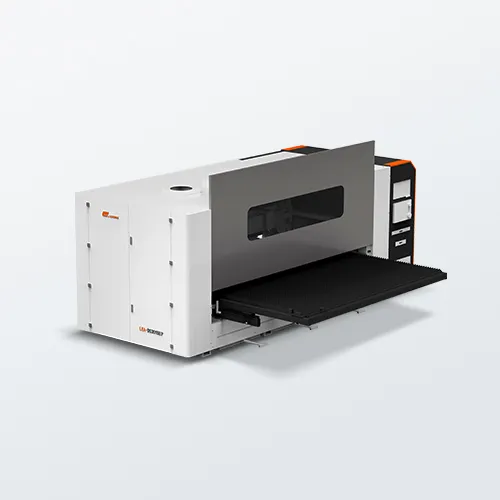
Clarify Your Production Requirements First
Before comparing laser cutting machine specifications, start by mapping what you will cut. The first step is to match material types and thicknesses to realistic processing windows, then define the production pattern that will drive duty cycle and automation needs.
Match Material Types and Thicknesses to Laser Cutting Machine Capabilities
Begin with a documented list of materials—including the maximum thickness and edge quality target for each. Fiber laser sources handle carbon steel, stainless steel, aluminum, brass, and copper, but reflective metals require higher peak power or back-reflection protection. Material density, surface condition, and coating also affect cut quality: galvanized steel often demands different assist gas settings than cold-rolled steel, for example. A machine optimized for 1 mm stainless may cut 3 mm carbon steel well—but produce poor edges on 20 mm carbon steel. Use the table below as a starting reference:
| Material | Typical practical thickness range | Key consideration |
|---|---|---|
| Carbon steel | 1–25 mm with fiber laser | Assist gas choice affects edge oxidation |
| Stainless steel | 0.5–20 mm | Nitrogen assist preserves bright edge |
| Aluminum | 0.5–16 mm | High thermal conductivity demands power |
| Copper and brass | 0.5–8 mm | Reflective surface requires back-reflection control |
Confirm whether the machine’s maximum rated thickness matches your thickest production part—not just a one-time sample. Ask for cutting speed, assist gas pressure, and focal length test data for your exact material grade. If you process mixed materials daily, prioritize easy nozzle changes and preset parameter libraries. Request sample cuts on your actual material before finalizing the specification. Without this clarity, you risk buying a machine that works in a demo but fails on your shop floor.
Define Use Case: Prototyping, Medium-Volume Batch Production, or Continuous Heavy-Duty Fabrication?
After material fit, define how often the machine will run. Prototyping use typically involves frequent material changes, low duty cycles, and higher tolerance for manual setup. Medium-volume batch production requires balanced speed, repeatable part nesting, and quick job changeover—often supporting 8–12 hour shifts. Continuous heavy-duty fabrication demands a machine built for 20–24 hour operation, robust cooling, automated loading, and minimal maintenance windows. Ask the manufacturer for duty cycle ratings and examples of similar installations. A machine selected for prototype flexibility may lack the thermal stability needed for continuous 20 mm steel cutting; conversely, a heavy-duty system may be overbuilt for a shop producing 50 small brackets per week. This mismatch shows up as poor edge consistency or unplanned downtime. Matching use case to machine architecture prevents paying for unused capacity—or discovering underbuilt components after installation.
Verify Core Laser Cutting Machine Specifications
Before committing to a laser cutting machine, verify the core specifications that determine throughput, edge quality, and integration cost.
Laser Power, Work Area, Positioning Accuracy, and Software Integration Compatibility
Before comparing quotes, map four specs to your production plan. A mismatch in any one will reduce cutting speed, edge quality, or workflow efficiency.
| Specification | Typical 2026 Values | Selection Check |
|---|---|---|
| Laser power | 1.5 kW–6 kW fiber | Match material type and max thickness. |
| Work area | 1,500 × 3,000 mm standard | Confirm full sheet or tube length fits. |
| Positioning accuracy / repeatability | ±0.01 mm / ±0.03 mm | Verify with a test cut on fine holes. |
| Software integration | CAD/CAM import, process database, monitoring | Request a sample file run. |
Laser power choices in 2026 spec sheets typically span 1.5 kW to 6 kW. A 1.5 kW fiber source cuts thin stainless steel at roughly 1–2 m/min; a 6 kW source handles thick carbon steel plate with less dross. Work area must match your raw material handling—a 1,500 × 3,000 mm bed accommodates standard 5 × 10 ft sheets, while smaller shops may opt for compact alternatives like 1,300 × 2,500 mm. Positioning accuracy is not just a datasheet number: ±0.01 mm positioning and ±0.03 mm repeatability support sharp corners and small holes, but thermal growth or worn motion components can erode that within months. Software integration compatibility is the hidden bottleneck—the controller should accept native CAD/CAM files, store proven cutting parameters, and output real-time status to your MES or ERP. Skipping a trial run often leads to manual file repair and idle spindles.
Cooling System Design and Thermal Management for Sustained Beam Stability
Cooling system design directly affects beam quality during long runs. Fiber laser sources and cutting heads generate localized heat; without stable cooling, focus shift and kerf widening appear after 30–60 minutes of continuous cutting. Inspect the chiller’s temperature stability, not just its capacity. Mainstream 2026 configurations specify a water chiller holding ±0.5 °C and high-purity gas lines (≥99.999% nitrogen) to protect optics. Ask where temperature sensors are placed on the resonator, cutting head, and bed—if the cooling loop cycles too coarsely, thermal expansion of the gantry and rack can shift positioning beyond the repeatability budget. A well-designed system maintains focus position across multi-hour batches. Request a thermal drift test report covering at least four hours of continuous cutting.
Assess Real-World Cutting Quality and Precision
Key Metrics: Kerf Width, Cut Edge Verticality, Heat-Affected Zone (HAZ), and Burr Control
When evaluating a laser cutting machine, ask for test cuts on the exact material grade and thickness you plan to process. Kerf width—the material removed by the beam—typically ranges from 0.1 mm to 0.3 mm for thin sheet metal, depending on focus, nozzle, and assist gas. Cut edge verticality reflects how perpendicular the cut face is to the sheet surface; excessive taper may indicate incorrect focal position or a worn nozzle. The Heat-Affected Zone (HAZ) is the area where thermal cycling alters microstructure—a narrower HAZ reduces distortion risk and preserves mechanical properties. Burr control signals stable gas flow and proper parameter selection. Inspect samples visually, by touch, and with a micrometer or profile projector. Compare top and bottom edges for dross, striations, and roughness. Request a full-sheet cutting test, because edge quality should remain consistent across the entire work area—not only at the center.
Compliance with ISO 9013 and EN ISO 20623 — Plus Practical Defect Recognition Training
Ask whether the supplier certifies cut quality according to ISO 9013 geometrical tolerances and EN ISO 20623 surface requirements. ISO 9013 defines perpendicularity and angular tolerance classes for thermal cutting; EN ISO 20623 addresses related surface criteria such as roughness and waviness. A credible provider should map sample cuts to specific tolerance classes—and explain which class applies to your material and thickness. Beyond documentation, request operator training that covers practical defect recognition: excessive dross, deep striations, undercut, edge melting, and surface discoloration. Training should include adjusting focal length, assist gas pressure, and cutting speed when defects appear. This combination of standard compliance and hands-on troubleshooting helps ensure the machine repeats acceptable quality over months of production—not only during a demonstration.
Evaluate Post-Purchase Support and Vendor Reliability
A laser cutting machine is a long-term production asset, so post-purchase support directly determines uptime, maintenance cost, and total cost of ownership. Before signing, request a written service-level agreement (SLA) that defines response times, escalation paths, and on-site technician availability for your region. Ask whether support is available by phone, email, live chat, or direct engineer access—and test it before purchase with a technical question about beam delivery or assist gas pressure. Fast, knowledgeable support reduces unplanned downtime; even a two-hour troubleshooting delay can cascade into missed delivery windows, overtime labor, and scrapped material.
Then compare warranty terms and spare parts logistics. A reliable manufacturer offers at least 12 months of parts and labor coverage, clear exclusions for consumables (e.g., nozzles and protective lenses), and an extended warranty option for the laser source. Confirm that critical spares—focus lenses, ceramic rings, servo drives, and controller boards—are stocked regionally or can be shipped within 24–48 hours. Ask about remote diagnostic capability: cloud-connected machines can transmit beam power, gas pressure, and axis load data to the vendor’s service team, often resolving issues without an on-site visit.
Use this checklist when evaluating vendors:
- Response time commitment and escalation procedure
- On-site technician coverage in your production area
- Spare parts availability and shipping lead time
- Warranty period, inclusions, and exclusions
- Remote monitoring and software update frequency
- Customer references with similar material and duty cycle
Finally, contact at least three current users with similar workloads and ask about uptime, warranty claim handling, and whether the vendor met its SLA. A trustworthy laser cutting machine manufacturer treats after-sales support as a continuous engineering commitment—not a one-time transaction.
FAQ
What materials can fiber laser cutting machines cut?
Fiber laser machines can cut carbon steel, stainless steel, aluminum, brass, and copper. However, reflective metals may require higher power or back-reflection protection for efficient cutting.
What is the typical duty cycle of a laser cutting machine?
Prototype systems often operate at low duty cycles, medium-volume production supports 8–12 hour shifts, while heavy-duty machines are designed for 20–24 hour continuous operation.
How do I ensure compatibility of the machine's work area with my material?
Verify that the machine’s work area dimensions accommodate your maximum raw material size. For example, a 1,500 × 3,000 mm bed fits standard 5 × 10 ft sheets.
What cooling system features are essential for sustained beam stability?
The cooling system should maintain ±0.5 °C temperature stability, use high-purity gas lines, and feature sensors on resonator, cutting head, and bed to prevent thermal drift.
What certifications should I look for in a laser cutting machine?
Look for compliance with ISO 9013 for geometrical tolerances and EN ISO 20623 for surface requirements. These certifications ensure consistent cut quality and precision.
How do I assess post-purchase support quality?
Request a service-level agreement (SLA), verify spare parts availability, confirm regional technician support, and contact current users for feedback on uptime and support efficiency.
Table of Contents
- Clarify Your Production Requirements First
- Verify Core Laser Cutting Machine Specifications
- Assess Real-World Cutting Quality and Precision
- Evaluate Post-Purchase Support and Vendor Reliability
-
FAQ
- What materials can fiber laser cutting machines cut?
- What is the typical duty cycle of a laser cutting machine?
- How do I ensure compatibility of the machine's work area with my material?
- What cooling system features are essential for sustained beam stability?
- What certifications should I look for in a laser cutting machine?
- How do I assess post-purchase support quality?