
 EN
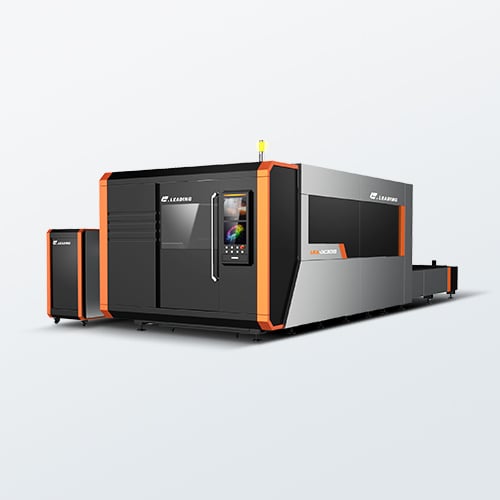
Match Laser Cut Machine Type to Your Primary Material and Application
Select a laser cut machine by first matching its wavelength and beam delivery to the workpiece material and thickness. The two most common industrial choices are CO₂ and fiber systems—each excels on different substrates.
CO₂ vs. Fiber Laser Technologies: Wavelength, Absorption, and Material Suitability
CO₂ lasers emit at 10.6 µm—a wavelength strongly absorbed by wood, acrylic, leather, paper, and many plastics—making them ideal for non-metal cutting and engraving. While they can cut thin metals using oxygen assist gas, energy absorption on steel and aluminum remains comparatively low. Fiber lasers emit near 1.06 µm; metals absorb this shorter wavelength far more efficiently, enabling faster, cleaner cuts in stainless steel, carbon steel, aluminum, brass, and copper with less heat input. A 2023 industry benchmark found that a 3 kW fiber laser cuts 3 mm stainless steel about 2.5 times faster than a comparable 3 kW CO₂ system. For organics, fiber’s shorter wavelength passes through or reflects, reducing effectiveness. In mixed-material shops, choose fiber for metal-first workflows and CO₂ for wood, acrylic, and plastics.
Material Compatibility Guide: Metals, Plastics, Wood, Acrylic, and Glass by Reflectivity and Thickness
Your primary material determines the most productive laser type. Reflectivity and thickness are the two biggest constraints. The table below summarizes practical guidance for common workpiece materials.
| Material | Best Laser Type | Typical Thickness Range | Key Limitation |
|---|---|---|---|
| Stainless steel, carbon steel | Fiber | 0.5–25 mm | CO₂ cuts thin steel but slower |
| Aluminum, copper, brass | Fiber | 0.5–12 mm | High reflectivity hurts CO₂ performance |
| Acrylic | CO₂ | 0.5–25 mm | Fiber can cut but leaves a charred edge |
| Wood, plywood, MDF | CO₂ | 0.5–18 mm | Fiber is generally not suitable |
| Plastics | CO₂ | 0.5–10 mm | Avoid PVC; chlorine gas is a safety risk |
| Glass | CO₂ for engraving | Surface marking only | Cutting requires specialized low-expansion glass |
For reflective metals, use fiber sources with back-reflection protection. For thicker mild steel, fiber still dominates below 25 mm—but very thick plate may require high-power CO₂ or plasma. Always test a sample of your actual material when possible, because pigments, fillers, and coatings change laser absorption even within the same material class.
Evaluate Critical Performance and Operational Factors for Your Workflow
Precision and Edge Quality: How Beam Mode (M²), Focal Spot Size, and Kerf Width Affect Part Accuracy
A laser cut machine’s precision starts with beam quality factor (M²), which indicates how tightly the beam can be focused. Single-mode sources with M² near 1.1 can produce focal spot diameters below 25 µm, while higher M² values create larger spots and wider heat-affected zones. A smaller focal spot increases energy density for fine features, but it shortens depth of focus—so sheet flatness and nozzle alignment become more critical. Kerf width typically ranges from about 0.1 mm to 0.3 mm on thin sheet with fiber sources and 0.15 mm to 0.5 mm with CO₂ sources. That kerf removes material and sets the practical minimum slot width and inside-corner radius. For tight-tolerance parts, confirm that the motion system holds repeatability under the same kerf and focus conditions, because beam wander, thermal drift, and lens performance can reduce edge straightness and dimensional accuracy—even when the laser source is stable.
Real-World Speed and Throughput: The Role of Automation, Nesting Software, and Duty Cycle
Real-world speed depends less on peak rapid traverse than on how continuously the system can process good parts. Automation—such as pallet changers, load/unload cells, and sheet towers—reduces non-cutting time; throughput audits show manual loading can keep beam-on time near 40–50%, while automated systems often push it above 70%. Nesting software improves throughput by grouping parts to minimize pierces, sharing cut lines where possible, and sequencing heads to avoid collisions. A 10% improvement in sheet utilization can reduce material cost more effectively than a 10% increase in cutting speed for many job shops. Duty cycle defines the percentage of time the laser can fire at rated power before thermal limits engage. Choose a system whose duty cycle, chiller capacity, and automation level match your longest production runs—not just maximum positioning speed.
Assess Total Cost of Ownership: Upfront Investment, Operating Costs, and Maintenance Requirements
Choosing the right laser cut machine requires a total cost of ownership (TCO) view that goes beyond the invoice price. The upfront investment includes the machine frame, laser source, controller, installation, safety enclosures, exhaust, and initial operator training. A 2023 industrial equipment TCO review found that energy, maintenance, and repair costs were predicted to be at least five times more relevant than the initial purchase price.
| Cost category | Typical items | TCO impact |
|---|---|---|
| Upfront investment | Machine, installation, safety enclosure, exhaust, initial training | Visible but usually less than 10% of lifetime cost |
| Operating costs | Electricity, assist gas, consumables, cooling, facility space | Recurring and variable with material and duty cycle |
| Maintenance and repair | Optics cleaning, filter replacement, alignment, spare parts, service labor | Drives uptime and long-term reliability |
Operating costs are often the largest hidden expense. Electricity demand rises with laser power and duty cycle, while assist gas—oxygen, nitrogen, or compressed air—adds per-hour charges that vary with material type and thickness. Consumables such as nozzles, lenses, protective windows, and filters require regular replacement. A high-power fiber laser may cut faster but consume more electricity; a lower-power CO₂ laser may have lower energy demand but higher gas and optics maintenance.
Maintenance planning should be evaluated before purchase. Preventive tasks include cleaning optics, checking beam alignment, replacing filters, and lubricating motion components. Unexpected downtime from failed parts or slow service support can erase initial savings. Buyers should compare warranty terms, spare parts availability, and service response times as part of the total cost of ownership.
Validate Laser Cut Machine Capability Against Your Thickest and Most Demanding Workpieces
Power, Wavelength, and Beam Delivery: How Energy Density Determines Maximum Thickness and Cut Quality
A laser cut machine’s maximum rated thickness rarely equals stable, economical production thickness. Energy density—not wattage alone—sets the practical limit, and it depends on power, wavelength absorption, and beam delivery quality. Typical 2023 industrial data shows a 6 kW unit cutting carbon steel up to 20–30 mm, while a 12 kW unit extends stable processing to 30–40 mm. At these upper ranges, edge striations, dross, and kerf variation often increase—even if piercing succeeds.
Wavelength also matters: 1 µm fiber lasers absorb better in steel than 10.6 µm CO₂ beams, improving thick-section penetration. Beam delivery then preserves that advantage. A tight 50 µm focal spot with M² near 1 produces higher energy density and cleaner cuts than a 100 µm spot at the same power. Conversely, CO₂ is often preferable for thick plastics and wood. Validate the selected unit on your thickest workpiece with dense contours, and request first article inspection before purchase.
FAQs About Laser Cut Machines
Which laser type is best for cutting stainless steel and aluminum?
Fiber lasers are the best choice for cutting stainless steel and aluminum due to their shorter wavelength, which metals absorb efficiently. This enables faster, cleaner cuts with less heat input.
Can I use CO₂ lasers for cutting metals?
CO₂ lasers can cut thin metals using oxygen assist gas, but their energy absorption on metals like steel and aluminum is relatively low, making them slower and less suitable for thicker materials.
What are the main cost factors in operating a laser cut machine?
Operating costs include electricity, assist gas consumption, consumables like nozzles and filters, and facility space. Maintenance costs also include regular cleaning, alignment, and replacement of spare parts.
How does precision vary between CO₂ and fiber lasers?
Fiber lasers often provide higher precision due to better beam quality (lower M² values), enabling smaller focal spots and narrower kerf widths for fine cutting details.
Table of Contents
- Match Laser Cut Machine Type to Your Primary Material and Application
- Evaluate Critical Performance and Operational Factors for Your Workflow
- Assess Total Cost of Ownership: Upfront Investment, Operating Costs, and Maintenance Requirements
- Validate Laser Cut Machine Capability Against Your Thickest and Most Demanding Workpieces
- FAQs About Laser Cut Machines